Heat Pumps & Heating
Water-source heat pump repair in Miami condos and offices
Many Miami high-rises cool each unit with a water-source heat pump tied to the building's water loop and cooling tower. When one fails, the repair is part HVAC work and part coordination with the building.
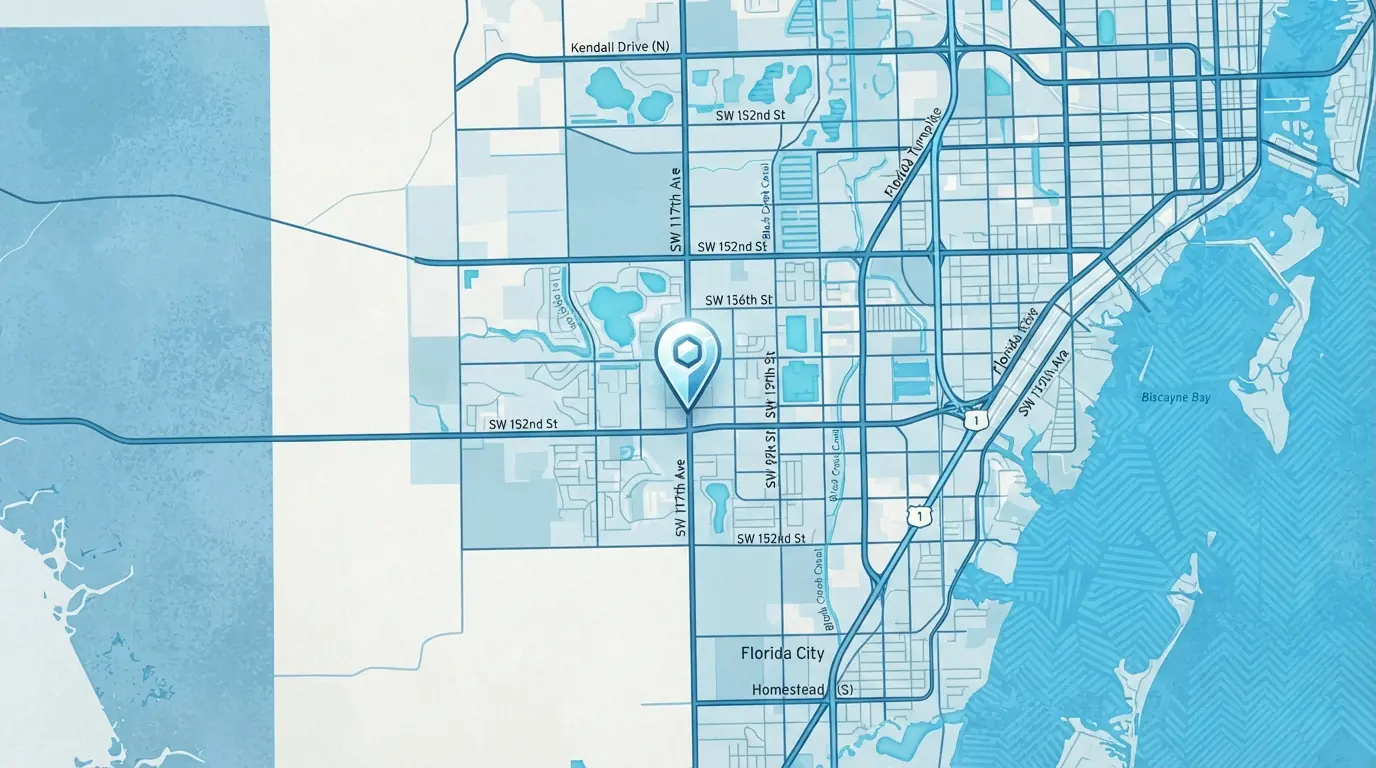
Miami service office on SW 117th Ave · We answer 24/7
- Answered 24/7
- Condo and office towers
- Building access handled
Updated October 2026
Water-source heat pump repair in Miami covers the closet and ceiling units that heat and cool individual condos and offices by exchanging heat with a building's shared water loop instead of outdoor air. Technicians from our SW 117th Ave office diagnose refrigerant, compressor, reversing valve, fan and control problems, check water flow and the coaxial coil, and coordinate any loop shutoff with building maintenance.
Warning signs
Signs a water-source heat pump needs attention
Warm air from the vents
Flow, refrigerant or compressor trouble.
Unit trips and resets
High or low pressure lockouts.
Water in the closet
Drain, hose or coil leak.
New rattles or hums
Blower, panels or compressor mounts.
Short cycling
Thermostat, refrigerant or flow problems.
Musty smell
Dirty coil or standing water in the pan.
Rising power bill
The unit working harder for the same cooling.
The job
How a water-source heat pump differs from a split system
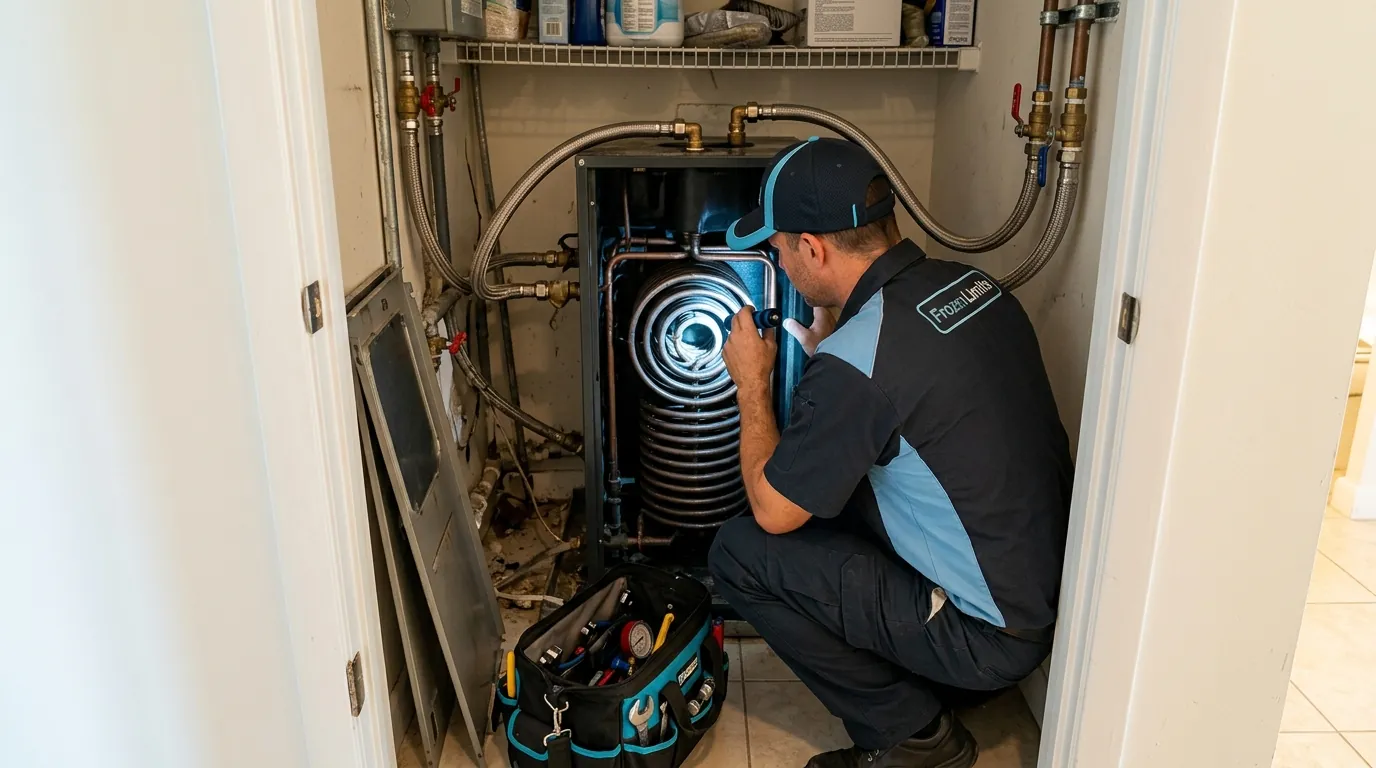
A water-source heat pump looks like a closet air handler but carries its own compressor. Instead of a condenser on the roof or balcony, it rejects heat into water that circulates through the building in a loop, and a cooling tower on the roof sheds that heat outdoors. Each unit runs on its own thermostat, so one owner's system can fail while the rest of the floor is fine.
That design changes the repair. The refrigerant circuit sits entirely inside the unit, the water side depends on the building's pumps, valves and strainers, and the coaxial heat exchanger between them can scale up or leak. A good repair checks both sides before replacing parts.
Step by step
How a water-source heat pump call runs
- 1
Check the thermostat and filter
The quick causes first.
- 2
Measure water temperatures
Entering and leaving the coil.
- 3
Check flow
Valves, strainer and hoses.
- 4
Read refrigerant pressures
Leak, valve or compressor.
- 5
Inspect the drain and pan
Overflow risks cleared.
- 6
Repair or quote
Part replaced, or options laid out.
- 7
Test and report
Cooling verified, building told if needed.
What we see on this job
Water-source heat pump not cooling
A unit that runs but blows warm air usually points to one of four things: low water flow through the coaxial coil, a refrigerant leak, a failing compressor or a reversing valve stuck in heating mode. We measure the entering and leaving water temperatures, check the unit's isolation valves and strainer, and read refrigerant pressures. If water flow is the problem, the fix may be a clogged strainer at the unit or a building-side issue we flag to maintenance. If it is refrigerant, we find the leak before adding charge, because these units hold a small charge and lose capacity quickly when it drops.
Noisy, leaking or tripping units
Water-source units sit close to the living space, so noise and leaks show up fast. Rattles and hums usually come from a worn blower motor, loose panels or a compressor on tired mounts. Water on the floor comes from a clogged condensate drain or pan, a leaking hose connection or a weeping coaxial coil. Units that trip on high or low pressure are often reacting to a water flow problem or a dirty air filter. We trace the cause and fix it, and we tell you plainly when a repeating problem means the unit is near the end of its life.
Repair or replace a water-source unit
Many Miami towers still run original or second-generation units, and older ones may use R-22, which is no longer produced. When the compressor or the coaxial coil fails on an old unit, replacement is often the better spend. Replacement units come in vertical closet and horizontal ceiling styles sized to fit existing openings, and they connect to the same water loop with new hoses and valves. We confirm dimensions, voltage and loop compatibility, and we work with management on the water shutoff timing and elevator access.
Local conditions
Why towers like Aventura's run on water loops
Aventura grew up in the early 1970s as a mainly high-rise residential area and now packs more than 15,000 people per square mile, and towers of that era across Miami-Dade often cool each unit with a water-source heat pump on a shared loop. That puts the compressor in the owner's closet, the heat rejection on the roof, and the repair somewhere between the owner and the association.
Your options
Repair, replace the unit, or convert
| Repair | New water-source unit | Convert to a split system | |
|---|---|---|---|
| Best when | Newer unit, single failure | Old unit, major failure | Owner and building both prefer it |
| Building approval | Rarely needed | Usually for access | Almost always |
| Disruption | Hours | About a day | Several days |
| Cost | Lowest | Moderate | Highest |
Most of our tower jobs end in a repair or a like-for-like replacement. Conversions make sense only when the building allows them and there is a place for an outdoor unit.
Brands we service and install
What moves the price
What decides the price of a water-source heat pump repair
Failed part
Fan motor, valve, compressor or coaxial coil.
Refrigerant
Leak search and recharge of a small charge.
Unit age
Older units may be better replaced than repaired.
Water side
Strainer cleaning, hoses and isolation valves.
Access
Closet, ceiling or soffit units.
Building coordination
Loop shutoff, elevator and work hours.
Time of the call
After-hours and weekend calls carry a premium.
FAQ
Questions Miami customers ask about water-source heat pump repair
Usually the unit in your closet is yours, and the water loop, pumps and cooling tower belong to the association, but your condo documents decide. We tell you which side the problem is on.
Often the loop water runs warm as the cooling tower struggles in peak heat, or the unit is low on refrigerant and cannot keep up as the load climbs.
Sometimes, but it usually needs association approval and a place for an outdoor unit. In most towers a new water-source unit is the simpler path.
Change the filter often, clean the drain at least once a year, and have the coil, refrigerant and water connections checked annually.
For hose or valve work, usually yes. We coordinate with maintenance so the shutoff is short and scheduled.
Yes. Office and medical buildings use the same equipment, and we service it the same way.
Same category
Related heat pumps work we handle in Miami
Heat Pump Repair
Reversing valve problems, defrost board faults.
Heating Repair
Electric heat strip replacement, burning smell on the first cold night.
Pool Heat Pump Installation and Repair
New pool heat pump sizing and install, heat exchanger and coil repairs.
Condo unit blowing warm? Call any hour
A technician checks the unit and the water side, and works with your building on access and shutoffs.