Ductwork & Air Quality
Indoor air quality testing for Miami homes and offices
Dust that comes back a day after cleaning, air that feels heavy, or a room that smells musty usually has a cause in the system: humidity it can't control, filtration that isn't working, or duct pulling in attic air. We measure first, then point to the fix.
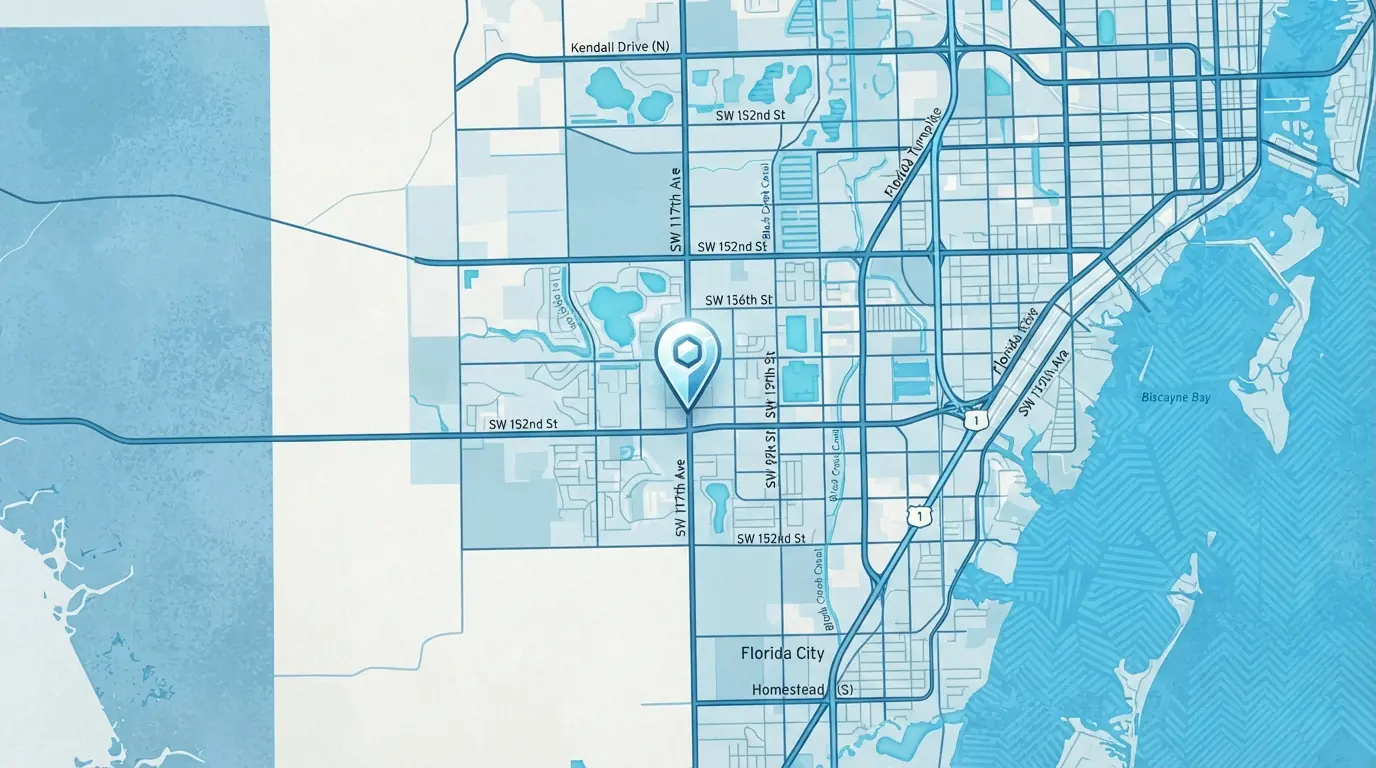
Miami service office on SW 117th Ave · We answer 24/7
- Answered 24/7
- Miami service office
- Measured, not guessed
Updated October 2026
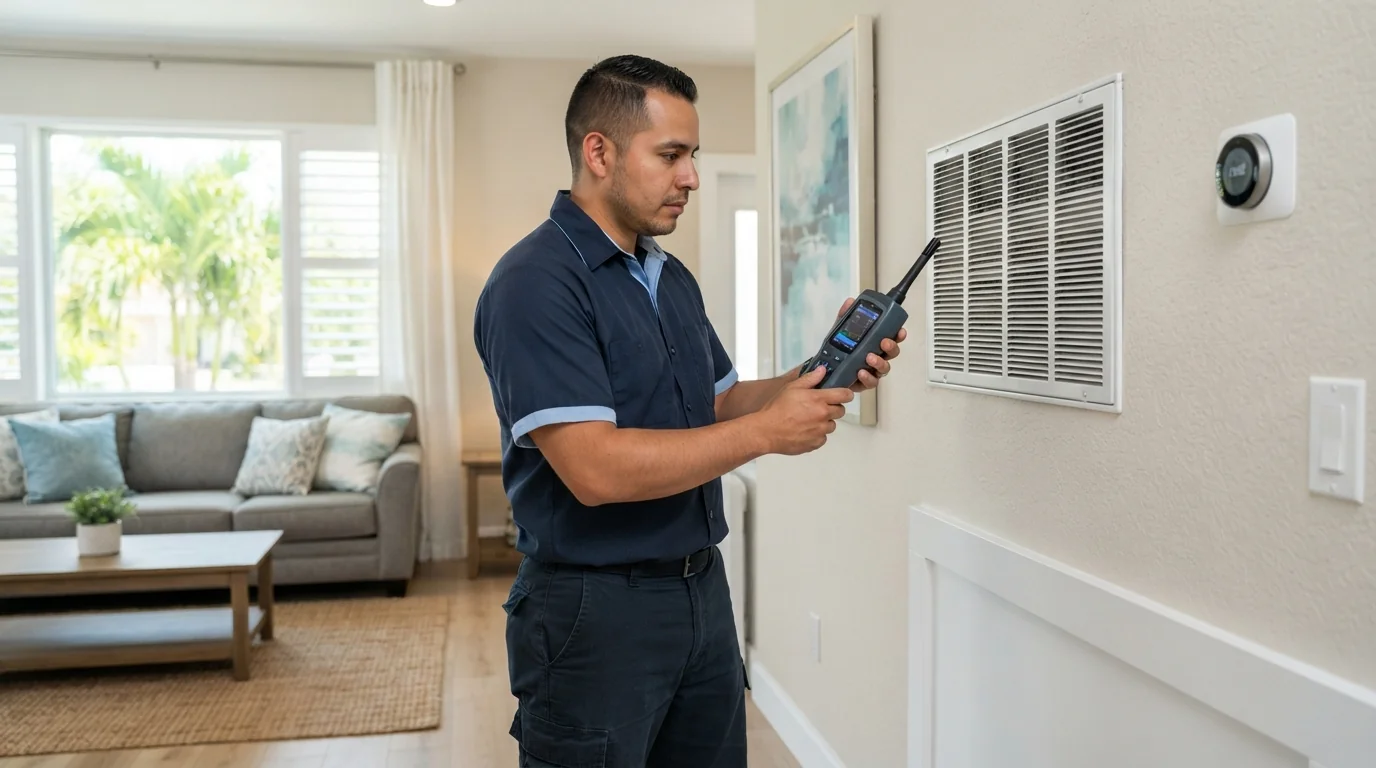
Indoor air quality testing in Miami measures humidity and temperature over time, airborne particles, carbon dioxide as a sign of ventilation, and the system's airflow and filtration, then traces problems back to their cause in the AC, duct or filters. A technician from our SW 117th Ave office writes up the readings and recommends the specific fix rather than selling equipment first.
The job
What an HVAC air quality check can and can't tell you
Most indoor air complaints in Miami come back to the cooling system: humidity it doesn't remove, a filter that doesn't fit or clogs quickly, leaky return duct pulling in attic dust, or a coil and drain pan growing something. Those are measurable, and they're our job to fix.
We're HVAC technicians, not mold assessors or industrial hygienists. When readings suggest a problem beyond the system, such as visible growth in walls, we say so and recommend the right specialist.
Your options
Common fixes the testing points to
| Finding | Usual fix |
|---|---|
| High humidity at night | Fan on auto, sizing check or a dehumidifier |
| Dusty supply air | Filter fit, media cabinet, seal bypass |
| High CO2 | More fresh air through ventilation |
The testing decides the fix; we don't recommend equipment the readings don't support.
What moves the price
What decides the price of air quality testing
Number of rooms
Loggers and readings per room.
Logging period
Several days of humidity data.
Particle testing
Indoor, outdoor and supply comparisons.
System inspection
Coil, pan, blower and duct.
Report
Readings and recommendations written up.
Follow-up
Re-testing after fixes.
Commercial spaces
Larger areas and more systems.
What we see on this job
Humidity and temperature logging
We place small data loggers in the problem rooms for several days to record humidity and temperature through the day and night. The pattern shows whether the AC is removing moisture, whether humidity spikes at night when the system cycles off, and whether one room differs from the rest. Spot readings miss most of this. The log, together with the system's runtime and airflow, usually tells us whether the fix is settings, duct sealing, a dehumidifier or a correctly sized system.
Particles and dust
A particle counter measures airborne particles in the rooms and compares them with the outdoor air and with the air leaving the supply grilles. If the supply air is dusty, the filter isn't catching it or air is bypassing the filter. If returns pull more dust than they should, the return duct may be leaking into the attic. We check filter fit and rating against what the blower can handle, and look for the bypass or leak rather than just recommending a better filter.
Moisture checks at the system
At the air handler we check the coil, drain pan, blower wheel and insulation for moisture and visible growth, measure the humidity of the supply air, and check for duct sweating and condensation at grilles. Standing water in the pan, a slow drain or a sweating duct are system problems we fix. Signs of moisture or growth in walls or ceilings away from the system are beyond an HVAC check, and we tell you when a licensed mold assessor is the right next call.
What is included
What an air quality check includes
- Humidity and temperature logged over several days
- Particle counts indoors, outdoors and at supply grilles
- CO2 readings in occupied rooms
- Filter fit and rating checked
- Coil, drain pan and blower inspected
- Return duct checked for leaks
- Duct and grille condensation checked
- Written report with readings
- A licensed mold assessor recommended when needed
Local conditions
Saharan dust and air quality alerts in Miami-Dade
Saharan dust is a regular visitor to South Florida between late June and mid-August, and it can lower air quality; in June 2026, wildfire smoke and Saharan dust together prompted an air quality alert in Miami-Dade. Those are the weeks when a filter that fits properly, a return that doesn't leak and a system that isn't pulling in unfiltered air make a noticeable difference indoors.
Step by step
How an air quality visit runs
- 1
Talk through the complaints
Where, when and what.
- 2
Place humidity loggers
Several days of data.
- 3
Measure particles
Rooms, outdoors and supply air.
- 4
Check CO2
A sign of ventilation.
- 5
Inspect the system
Coil, pan, filter and duct.
- 6
Collect the loggers
Patterns reviewed.
- 7
Report and recommend
Specific fixes, not a sales list.
FAQ
Questions Miami customers ask about indoor air quality testing
No. We check the HVAC system for moisture and growth and refer you to a licensed mold assessor when needed.
Most homes are comfortable between the mid-40s and mid-50s percent.
Often a filter that doesn't fit, air bypassing it, or leaky return duct.
Sometimes. We measure first so you don't buy equipment that doesn't address the cause.
A visit to set up, several days of logging, and a follow-up visit.
Yes, including humidity, particles and CO2 in occupied spaces.
Same category
Related ductwork work we handle in Miami
Dryer Vent Cleaning
Long dryer vent runs, bird guards and screens.
Air Balancing
Hot and cold rooms, balancing after renovations.
Air Duct Cleaning
Supply and return cleaning, sanitizing after cleaning.
Air feel heavy or dusty indoors? Call the Miami office
A technician measures the air and the system and tells you what's actually causing it.