Installation & Replacement
AC unit relocation for Miami renovations and additions
A condenser in the way of a new pool deck, an air handler in a closet you want back, or a unit sitting where water pools in every storm. We move the equipment, extend or replace the lines, and put it back together properly.
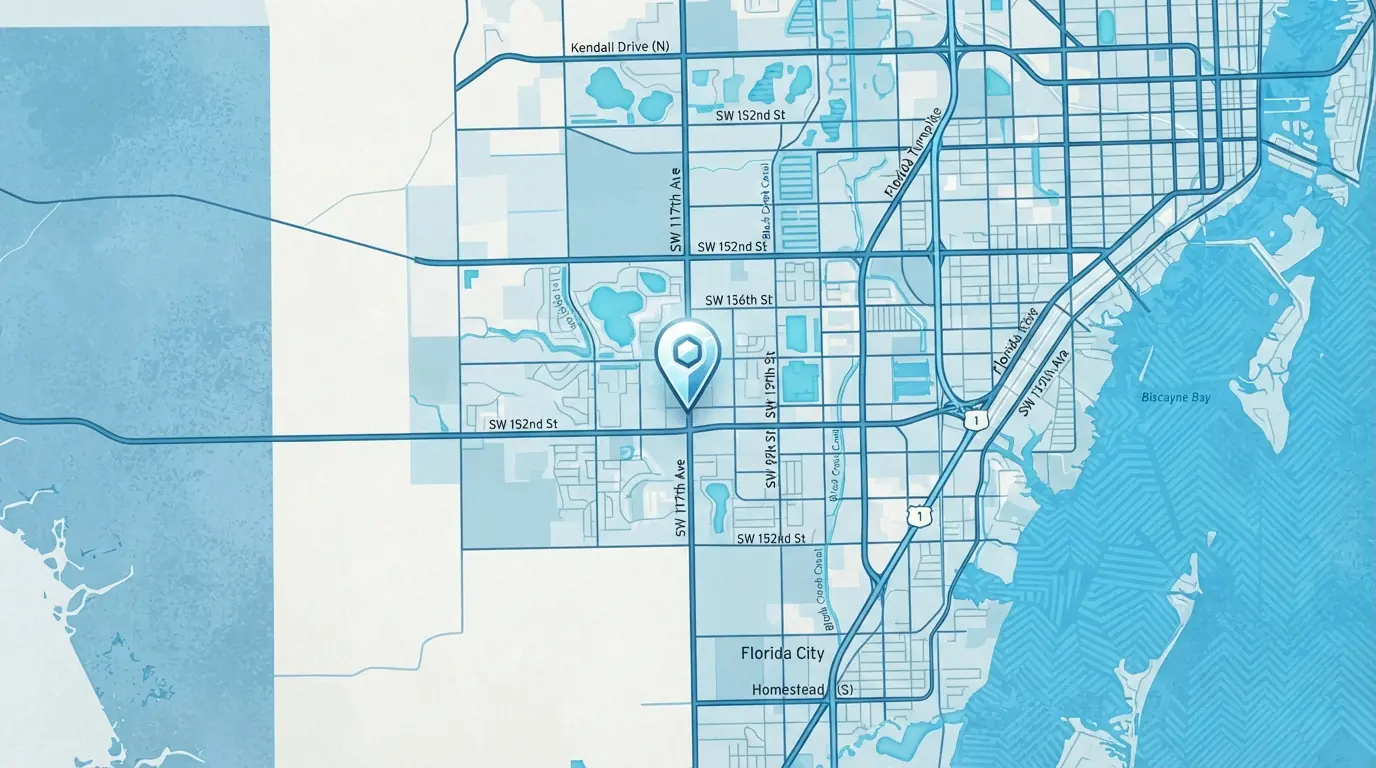
Miami service office on SW 117th Ave · We answer 24/7
- Answered 24/7
- Miami service office
- Permitted and anchored
Updated October 2026
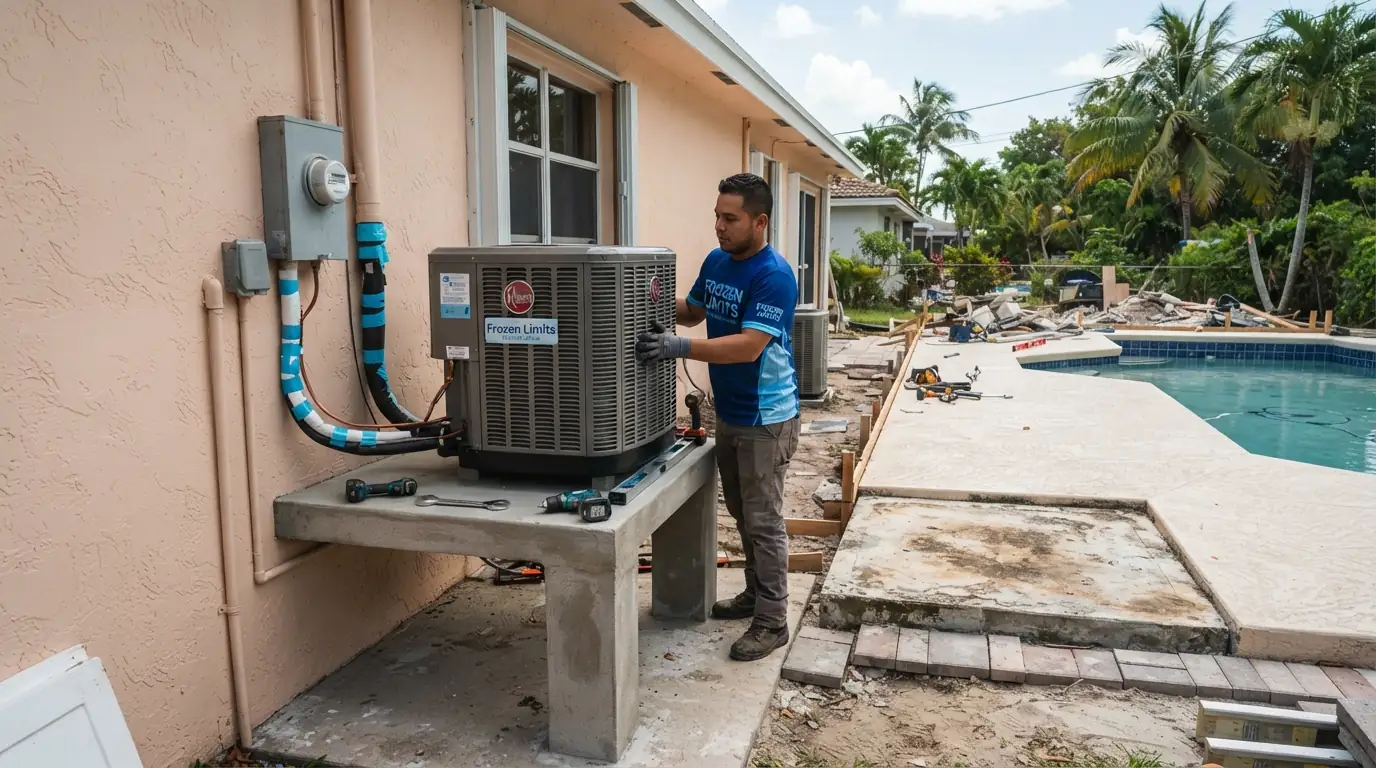
AC unit relocation in Miami means moving the outdoor condenser or the indoor air handler to a new location, usually for an addition, pool, renovation or a spot that floods. A technician from our SW 117th Ave office plans the new location, recovers the refrigerant, extends or replaces the line set, drain and wiring, anchors the unit to code, and recharges it for the new line length.
The job
What moving an AC unit involves
Moving a condenser isn't just lifting it. The refrigerant has to be recovered, the line set extended or replaced, the electrical disconnect and wiring moved, a new pad poured or set, and the unit anchored and recharged for the new line length.
Moving an air handler adds the duct, the return, the drain and the thermostat wiring. Done carefully, the system runs as well as it did; done in a hurry, it leaks, drains badly or loses airflow.
Your options
Relocate, raise or replace
| Relocate | Raise in place | Replace | |
|---|---|---|---|
| Best when | Unit is in the way or badly placed | Unit floods but the spot is otherwise fine | Unit is old anyway |
| Line work | Extended or replaced | Minor | New system lines |
| Cost | Moderate | Lower | Highest |
If the system is near the end of its life, moving it is often not worth it; we price the alternatives together.
What moves the price
What decides the price of a relocation
Distance moved
Longer line sets cost more.
Indoor or outdoor
Air handler moves add duct work.
New pad or stand
Poured, set or raised.
Electrical
Disconnect and wiring moved.
Refrigerant
Recovery and recharge for new length.
Drain
New route or a pump.
Permit and anchoring
Miami-Dade permit and wind-rated hardware.
What we see on this job
Moving the outdoor unit
Common reasons are a new pool, deck or addition, a noisy unit under a bedroom window, or a spot that floods. The new location needs clearance for airflow and service, a level pad and anchoring, and a reasonable line set route. We recover the refrigerant, set the unit in its new spot, extend or replace the lines, move the disconnect and wiring, pressure-test and evacuate, and adjust the charge for the new line length. Longer runs may need a different line size or added charge per the manufacturer.
Moving an air handler
Homeowners move air handlers to free up a closet, during a kitchen or garage renovation, or to get the unit out of an attic. The new location has to fit the unit with service clearance, connect to the supply and return duct without choking airflow, drain by gravity or through a pump, and have power and thermostat wiring. We plan the duct changes with the move, because an air handler squeezed into a new spot with a crushed return can lose a lot of its capacity.
Relocating for additions and pools
Additions and pool projects often land exactly where the condenser sits. Coordinating with the contractor early saves money: the new pad and line route can be planned before the slab or deck is poured. We also check whether the existing system can serve the addition at all; if the load calculation says no, a separate mini split for the new space may make more sense than extending duct from an already-stretched system and leaving both the old rooms and the new one short of air.
Local conditions
Moving units out of low spots near the bay
In low-lying neighborhoods like Lakes by the Bay in Cutler Bay, close to Biscayne Bay, a condenser that sits where water gathers in heavy rain is a common reason to relocate. Moving the unit to higher ground or onto a raised stand, with the lines, drain and wiring rerouted, is often cheaper over time than replacing flood-damaged equipment after a storm, and it can be planned during dry season when the work is easier.
Step by step
How a relocation runs
- 1
Plan the new location
Clearance, airflow, route and drainage.
- 2
Permit applied for
Where the move requires one.
- 3
Recover the refrigerant
Before disconnecting.
- 4
Move and set the unit
Pad or stand, anchored.
- 5
Extend lines and wiring
Supported, insulated, sealed.
- 6
Pressure-test and evacuate
Before recharge.
- 7
Charge and start
Adjusted for the new line length.
Timing
How long a relocation takes
Moving a condenser a short distance usually takes most of a day, including recovery, line work, evacuation and charging. Air handler moves with duct changes can take one to two days. Pads that need to cure are poured ahead of time.
FAQ
Questions Miami customers ask about AC unit relocation
Yes. It's easiest when planned before the deck or slab is poured.
Within the manufacturer's line length limits; longer runs may need larger lines.
Often yes in Miami-Dade; we check and pull it when required.
Usually, with duct, drain and wiring changes planned together.
Not if the lines, charge and airflow are done correctly.
Often yes; raising or relocating it is cheaper than replacing flooded equipment.
Same category
Related installation work we handle in Miami
AC Line Set Replacement
Line set flush or replace, refrigerant changeover to R-454B.
Condenser Replacement
Outdoor unit only, pad and tie-down replacement.
Ductless Mini Split Installation
Single-zone mini split, garage and Florida room cooling.
Need your AC unit moved? Call the Miami office
A technician plans the new location, the lines and the permit before anything is disconnected.