Ductwork & Air Quality
Duct repair and sealing for Miami attics
Duct that leaks into a Miami attic pulls in air at well over 100 degrees and loses cooled air on the way to the rooms. Sealing it is often the least expensive way to get comfort and capacity back.
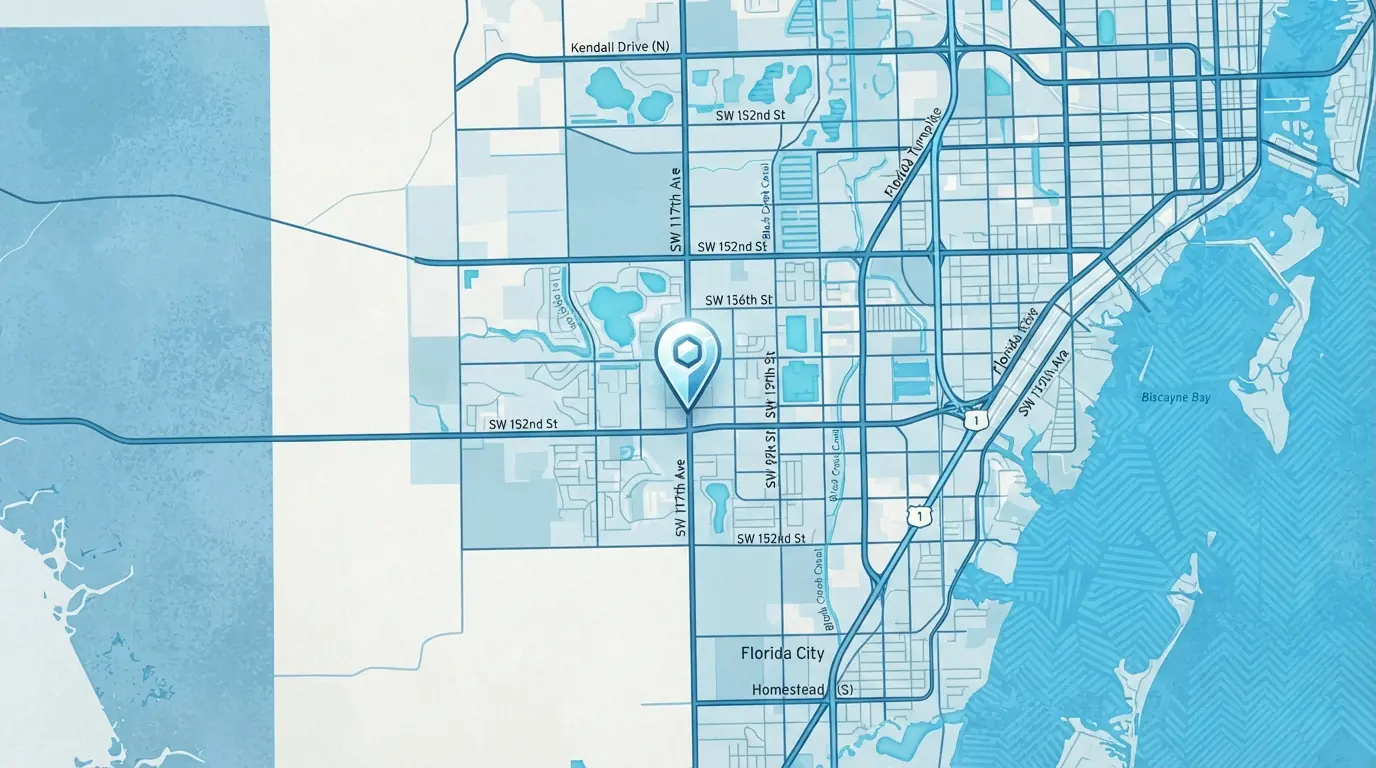
Miami service office on SW 117th Ave · We answer 24/7
- Answered 24/7
- Miami service office
- Mastic, not just tape
Updated October 2026
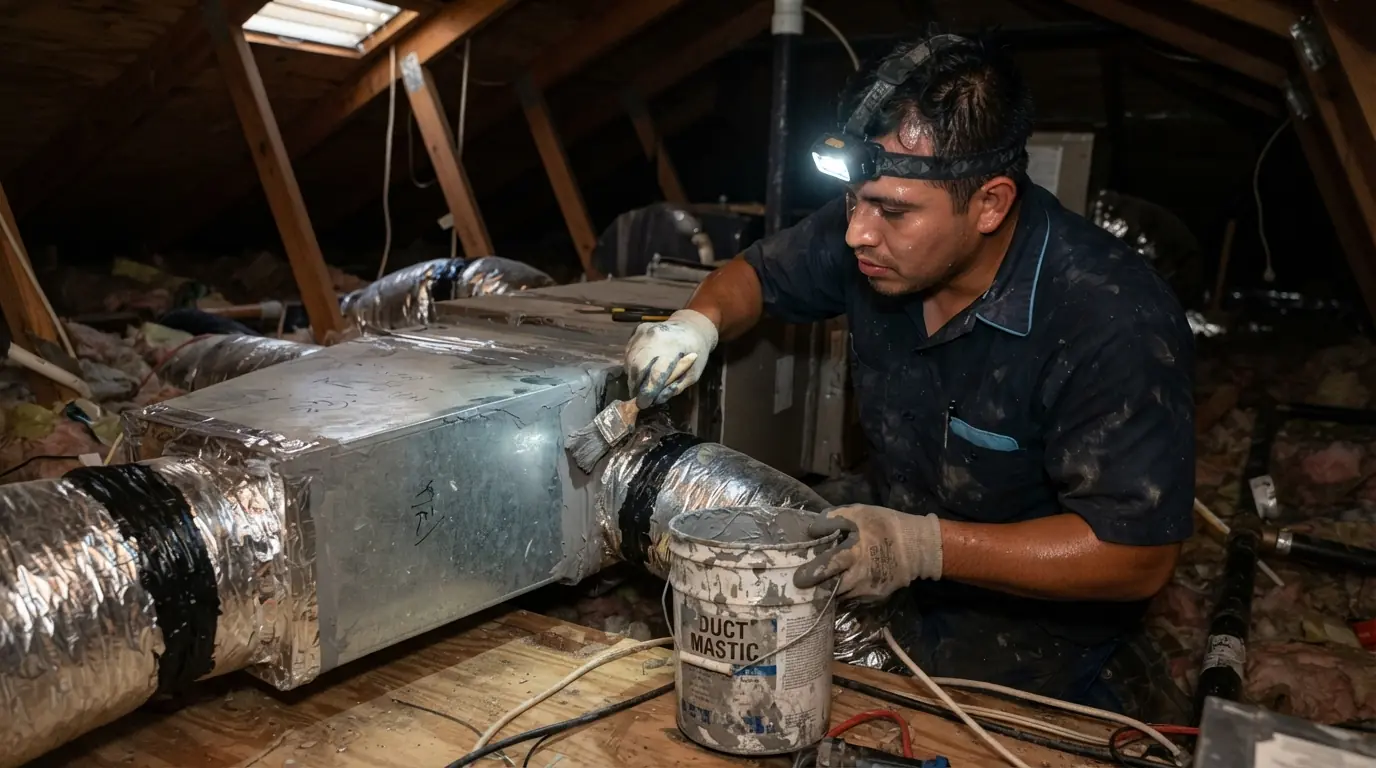
Duct repair and sealing in Miami typically runs $500 to $2,000 in published 2026 guides, depending on how much duct is reached and repaired. A technician from our SW 117th Ave office finds leaks at the plenum, joints and boots, seals them with mastic, reconnects or replaces crushed flex runs, and restores the insulation so the duct stops sweating in the attic.
The job
Why leaky duct matters more in Miami than most places
A supply leak blows cooled air into the attic instead of the room. A return leak is worse: it pulls hot, humid attic air straight into the system, adding load the equipment wasn't sized for and bringing in dust and moisture with it.
Symptoms look like equipment problems: rooms that never cool, a system that runs all afternoon, dust on the furniture and a house that feels damp. Finding and sealing the leaks often fixes all of them at once.
What moves the price
What decides the price of duct repair
Planning range: Duct sealing and minor repairs: $500-$2,000 in published 2026 guides. A market range, not our quote.
Extent of leaks
A few joints or the whole system.
Attic access
Shallow, hot attics take longer.
Flex replacement
Torn or crushed runs replaced.
Insulation repair
Wrapped fittings and repaired jackets.
Plenum condition
Rebuilt when it leaks or rusts.
Boots and grilles
Sealed to the ceiling.
Testing
Before and after airflow checks.
What we see on this job
Leaking duct joints
The biggest leaks are usually at the connections: where the plenum meets the air handler, where trunks join branches, and where duct boots meet the ceiling. Cloth duct tape dries and lets go within a few years in attic heat. We seal joints with mastic, a thick paste that stays flexible, reinforced with fiberglass mesh on larger gaps, and use foil tape only where the product is rated for it. Boots are sealed to the drywall so the ceiling cavity isn't pulling attic air in.
Crushed or disconnected flex duct
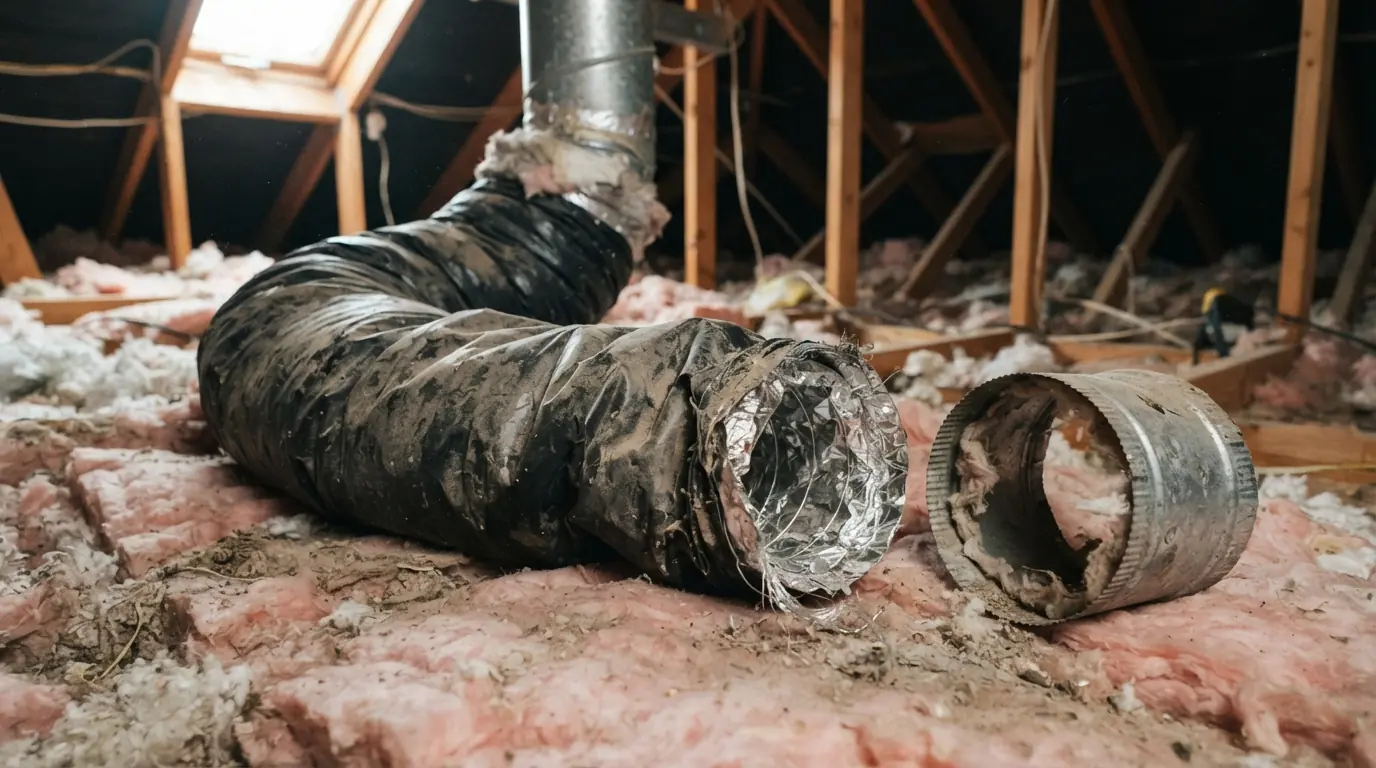
Flex duct gets stepped on during other attic work, kinked around trusses or pulled off its collar entirely, and a fully disconnected run can dump a room's cooling into the attic for years without anyone noticing. We walk the attic, find the runs that are crushed, sagging or loose, and reconnect them with proper clamps and sealed collars. Runs that are torn, flattened or far longer than they need to be are replaced with new insulated flex and supported with straps every few feet so they don't sag again.
Attic duct insulation
Duct in a hot attic needs its insulation intact, or the cold metal and plastic sweat in the humid air, drip on the ceiling and grow mold. Torn jackets, bare collars and uninsulated plenums are common in older installs. We repair or replace the insulation on damaged sections, wrap bare fittings, and seal the vapor jacket so moisture can't reach the cold surface. Where large sections are compromised, replacing the duct run with new insulated flex is usually cheaper than patching.
Do it yourself or call
What a homeowner can check
Safe to check
- Feel for air at each vent with the system running.
- Look for dust streaks around ceiling grilles.
- Check the return grille and filter slot for gaps.
- Look for stains on ceilings near grilles.
Better left to us
- Attic work in summer heat.
- Mastic sealing at the plenum and trunks.
- Reconnecting and strapping flex runs.
- Measuring airflow before and after.
The checks from inside the house tell you something is wrong. Finding and sealing the leaks means working in the attic with the right materials.
Local conditions
Block homes, shallow attics and Miami heat
Many homes across Miami-Dade are reinforced concrete block with hurricane-strapped roof trusses, and their duct runs through shallow attics where there is little room to work and every truss is a place for flex to kink. With Miami's average summer highs near 90 and dozens of 90-degree days a year, those attics run far hotter than the air outside, which is why a small leak there costs more than it would in a milder climate.
Step by step
How duct repair and sealing runs
- 1
Measure airflow
Supply temperatures and static pressure.
- 2
Walk the attic
Every run, joint and boot inspected.
- 3
Photograph problems
Leaks and crushed runs shown to you.
- 4
Seal the joints
Mastic and mesh at plenum, trunks and boots.
- 5
Repair flex
Reconnected, replaced and strapped.
- 6
Restore insulation
Jackets repaired, fittings wrapped.
- 7
Measure again
Airflow and temperatures after the work.
Warning signs
Signs your duct is leaking
Rooms that never reach setpoint
Supply leaks losing air before the room.
Dust on furniture soon after cleaning
Return leaks pulling in attic dust.
Sweating grilles or ceiling stains
Uninsulated or leaking duct near the boot.
High bills with long runtimes
The system is cooling the attic too.
A damp, clammy house
Humid attic air pulled into the return.
Whistling at the return
Air being pulled through a gap.
Weak airflow at one or two vents
A crushed or disconnected run.
FAQ
Questions Miami customers ask about duct repair and sealing
Rooms that never cool, dust, high bills and a damp feel are common signs. We confirm by inspection.
Cloth duct tape fails in attic heat. Mastic and rated foil tape last.
Published 2026 guides put sealing and minor repairs at $500 to $2,000.
It usually cuts runtime, because cooled air reaches the rooms instead of the attic.
If most runs are torn, crushed or uninsulated, replacement is often better value.
Most jobs take a day; attic work is done in the morning.
Same category
Related ductwork work we handle in Miami
Air Balancing
Hot and cold rooms, balancing after renovations.
Air Duct Cleaning
Supply and return cleaning, sanitizing after cleaning.
Duct Replacement
Full duct redesign, duct board to flex conversions.
Get the cooling back that's leaking into the attic
Call the Miami office to book an attic duct inspection and repair.