Installation & Replacement
Condo and high-rise AC replacement in Miami
Replacing a condo system is as much about the building as the equipment. We handle the association paperwork, the elevator and loading dock bookings, and the tight closet the new unit has to fit.
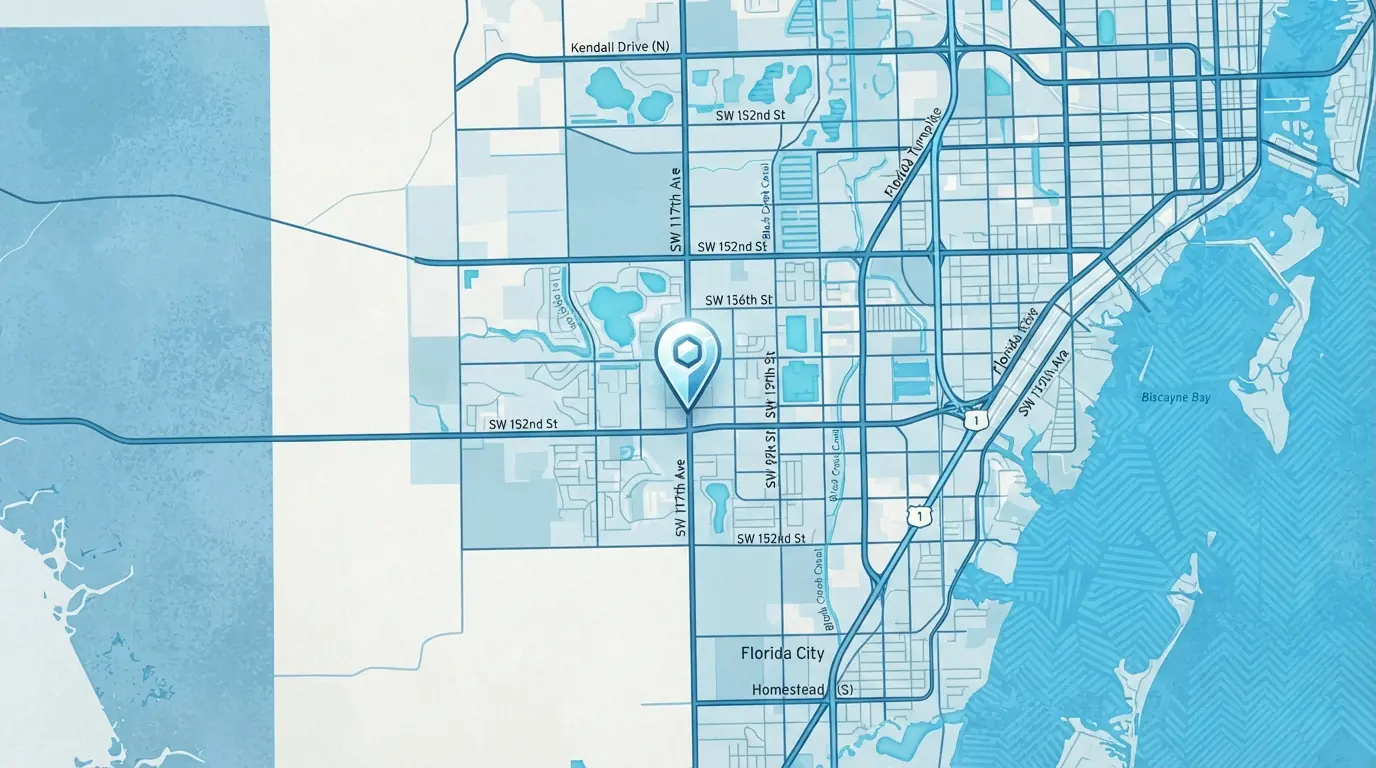
Miami service office on SW 117th Ave · We answer 24/7
- Answered 24/7
- Miami service office
- Building approvals handled
Updated October 2026
Condo AC replacement in Miami usually means replacing a fan coil tied to the building's water loop or a closet air handler with a remote condenser on a balcony or roof. A technician from our SW 117th Ave office confirms the system type, measures the closet, and coordinates the association approval, insurance certificate and elevator booking before any equipment is ordered.
The job
What makes a condo replacement different
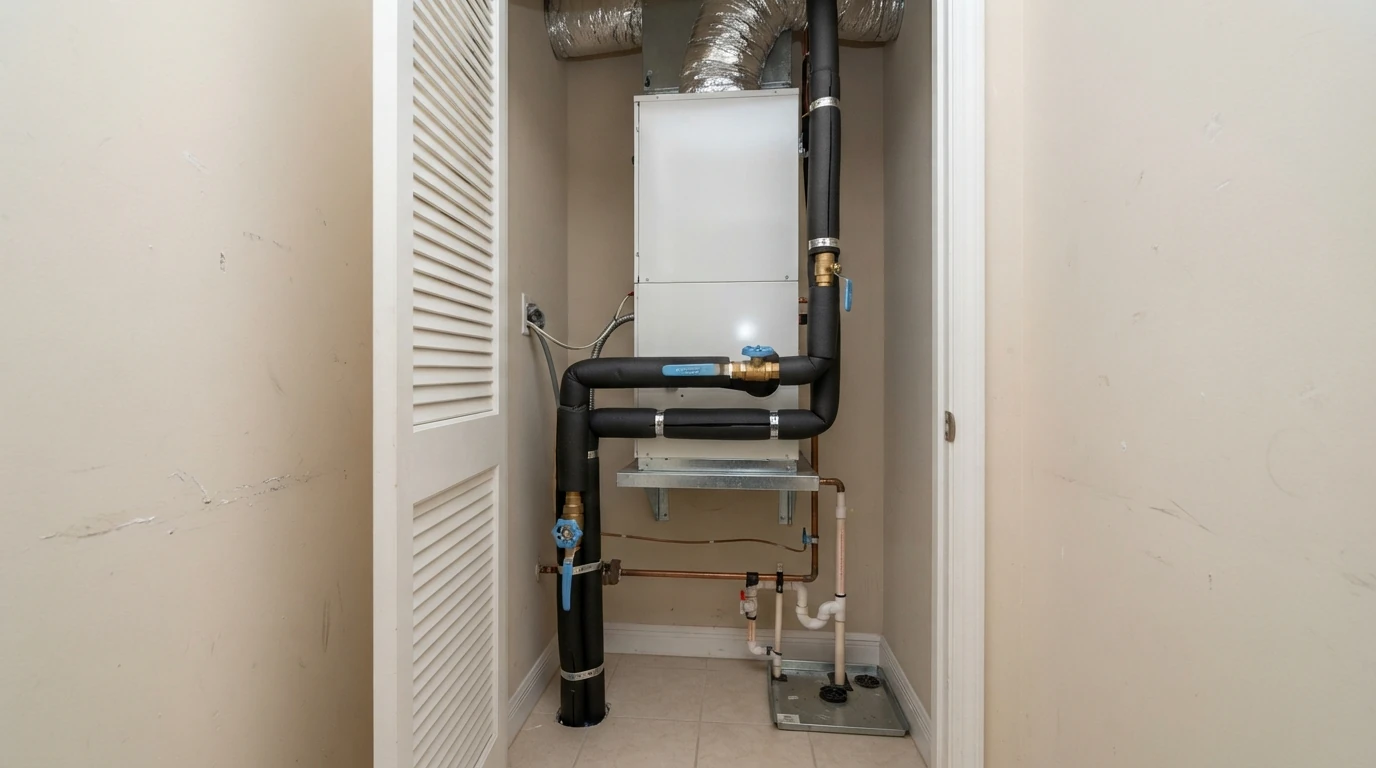
Condo buildings run on two main system types. Some use fan coils: an indoor blower and coil fed by chilled or condenser water from the building's central plant. Others use split systems, with a closet air handler inside and a condenser on the balcony, the roof or a mechanical floor.
Either way, the building sets the rules: approved equipment, work hours, insurance, elevator reservations and sometimes a building engineer who has to be present to shut off the water loop. Planning for those is what keeps the job to one day.
What moves the price
What decides the price of a condo replacement
System type
Fan coil or split air handler with condenser.
Equipment match
Loop temperatures or refrigerant and line length.
Closet size
Tight openings limit unit choice.
Building access
Elevator, dock and parking rules add time.
Water loop shutdown
Building engineer coordination on fan coils.
Condenser location
Balcony, roof or remote rack.
Permit and paperwork
Permit, insurance certificate and application.
What we see on this job
Fan coil units
A fan coil has no compressor of its own; it moves the building's chilled or condenser water through a coil and blows air across it. When the coil leaks, the valves stick or the cabinet rusts through, the whole unit is replaced. The water loop has to be isolated, usually by the building's engineer, and the new unit has to match the loop's temperatures, flow and pipe connections. We confirm those details with the building before ordering, because a mismatched coil can't be fixed on the day.
Closet air handlers with remote condensers
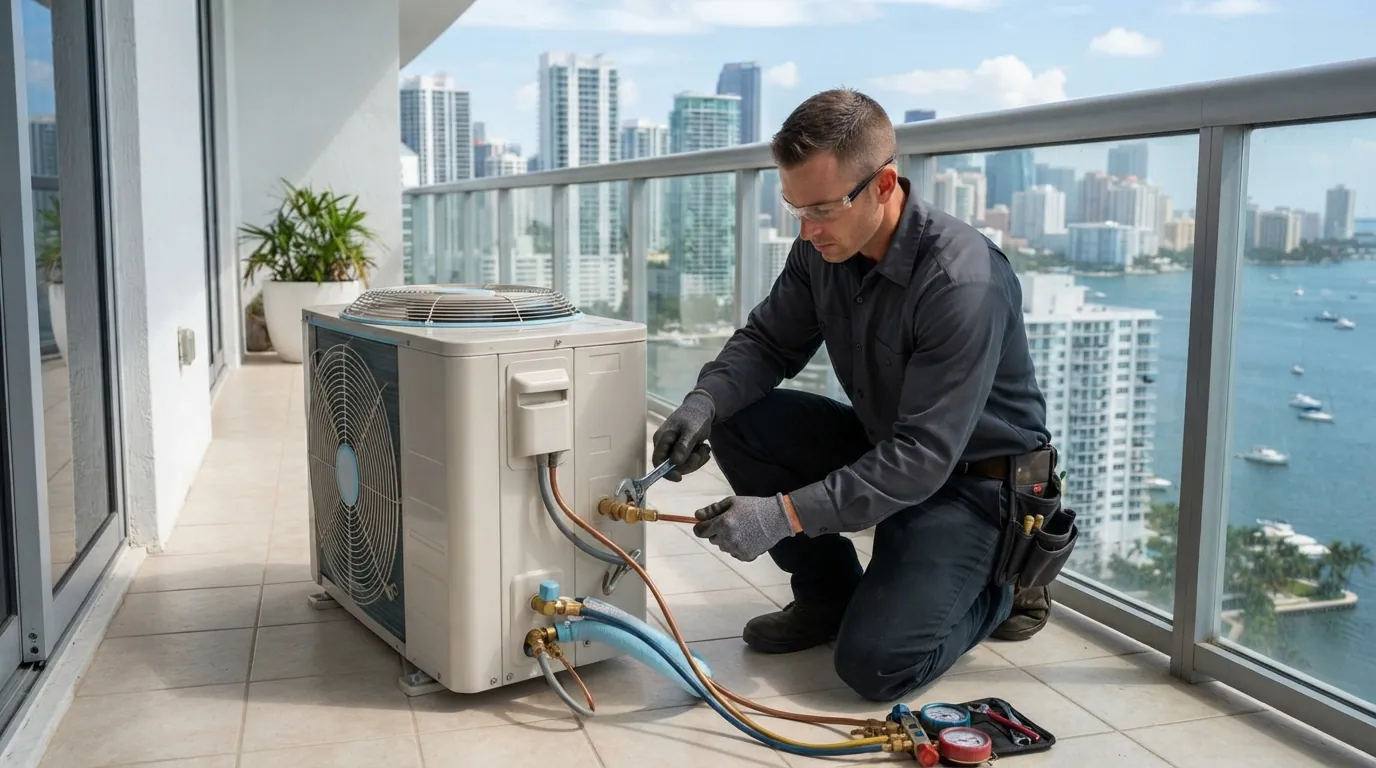
Many Miami condos have a split system: an air handler in a utility closet and a condenser on the balcony, the roof, or a condenser rack several floors away. Long line sets mean the refrigerant charge and the equipment match have to be checked carefully, and roof access usually needs the building's approval. We measure the closet opening and door clearance, confirm where the condenser sits and how the line set runs, and replace both units as a matched pair where possible.
Building and association approvals
Most associations want an application, the contractor's insurance certificate naming the building, the equipment specifications, and a date for the work. Some restrict work to weekday hours, require the service elevator to be padded and reserved, and limit parking at the loading dock. We prepare the paperwork, confirm the building's rules with the manager, and book the elevator before the equipment arrives, so the job isn't held up in the lobby on the day. If the building needs the old unit hauled out through a specific route, we plan for that too.
What is included
What a condo replacement from us includes
- System type and equipment match confirmed
- Closet opening and clearances measured
- Association application prepared
- Insurance certificate naming the building
- Elevator and loading dock booked
- Water loop shutdown coordinated
- Miami-Dade mechanical permit
- Old unit removed from the building
- Drain, float switch and airflow tested
Local conditions
Replacements in Brickell, Downtown Miami and the Beach
High-rise condos in Brickell and Downtown Miami add parking fees, elevator logistics and building access rules to every visit, and rooftop units in Miami Beach can need extra hands or a crane. Miami condo systems are usually fan coils or split air handlers rather than central systems, so the first question on a replacement call is which one the building uses and who controls the water loop.
Step by step
How a condo replacement runs
- 1
Confirm the system
Fan coil or split, and where each part sits.
- 2
Measure the closet
Opening, door clearance and service space.
- 3
Building paperwork
Application, insurance certificate, specs.
- 4
Book the building
Elevator, dock and engineer scheduled.
- 5
Permit applied for
Mechanical permit with equipment specs.
- 6
Install
Old unit out, new unit set, connected and sealed.
- 7
Start-up
Water flow or charge checked, drain tested.
Timing
How long a condo replacement takes
The install itself is usually one day. The paperwork is what takes time: association approvals can take one to three weeks depending on the building, so we start them as soon as you choose the equipment. Fan coil jobs also depend on the building engineer's schedule for the water loop shutdown.
Brands we service and install
FAQ
Questions Miami customers ask about condo and high-rise AC replacement
Usually a fan coil on the building's water loop or a closet air handler with a remote condenser. We confirm it on the first visit.
Most do. We prepare the application and insurance certificate with you.
Usually, once the building has isolated the water loop and the unit is on site.
Yes. Miami-Dade requires a mechanical permit for condo replacements too.
We measure before ordering. Some models are built for tight condo closets.
It depends on the building; we confirm with management before scheduling.
Same category
Related installation work we handle in Miami
New AC Installation
First-time central air, load calculation and sizing.
Air Handler Replacement
Closet air handlers, heat kit sizing.
AC Line Set Replacement
Line set flush or replace, refrigerant changeover to R-454B.
Replacing a condo AC? Let us handle the building
Call the Miami office, and we'll confirm your system type and start the association paperwork.