Heat Pumps & Heating
Pool heat pump installation and repair in Miami
A pool heat pump pulls warmth out of Miami's air and moves it into the water, and in a climate this mild it is the most efficient way to keep a pool swimmable from December through March.
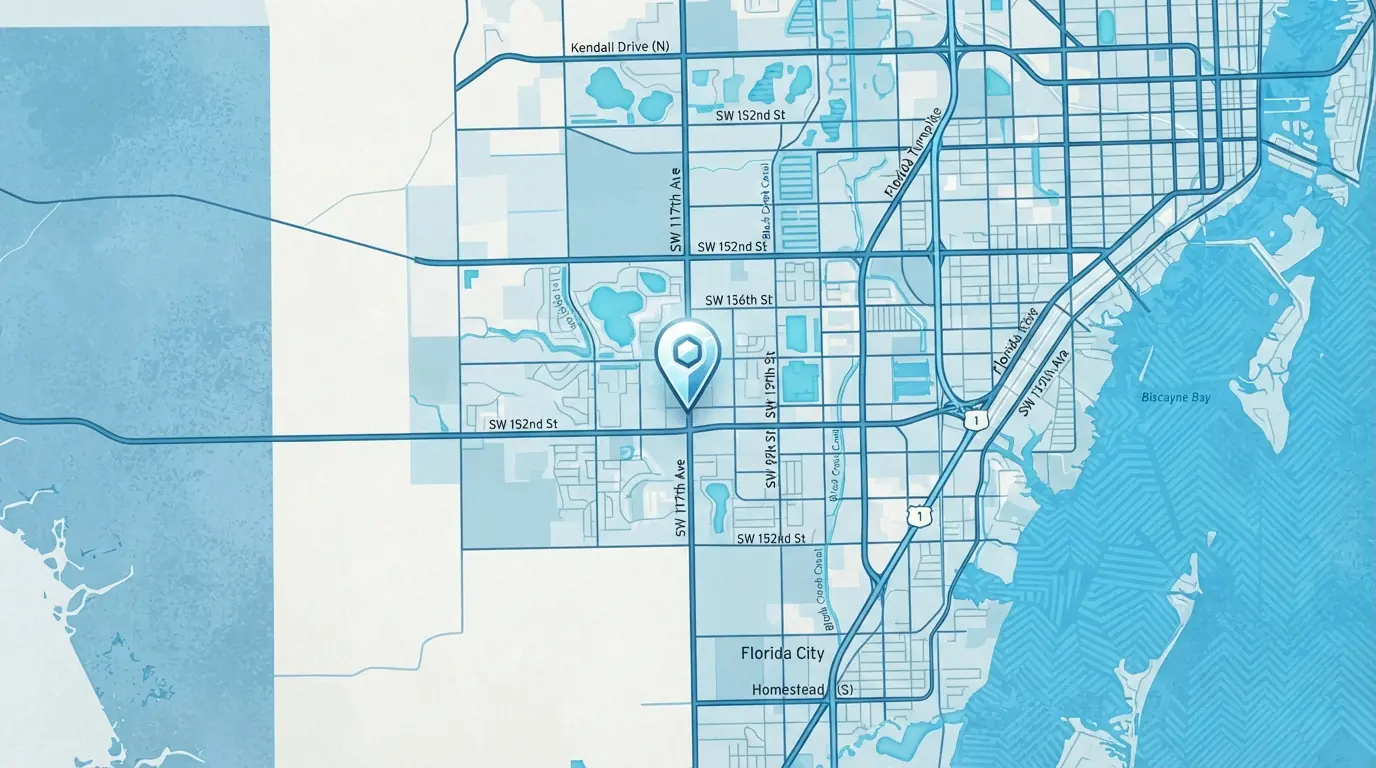
Miami service office on SW 117th Ave · We answer 24/7
- Answered 24/7
- Sized to your pool
- Most brands serviced
Updated October 2026
Pool heat pump installation and repair in Miami covers the electric heat pumps that warm residential and community pools by moving heat from outdoor air into the water. Technicians from our SW 117th Ave office size new units to the pool's surface area and the temperature you want, and repair existing ones: refrigerant leaks, failed fans, flow switches, corroded heat exchangers and control boards.
The job
How a pool heat pump works, and why it suits Miami
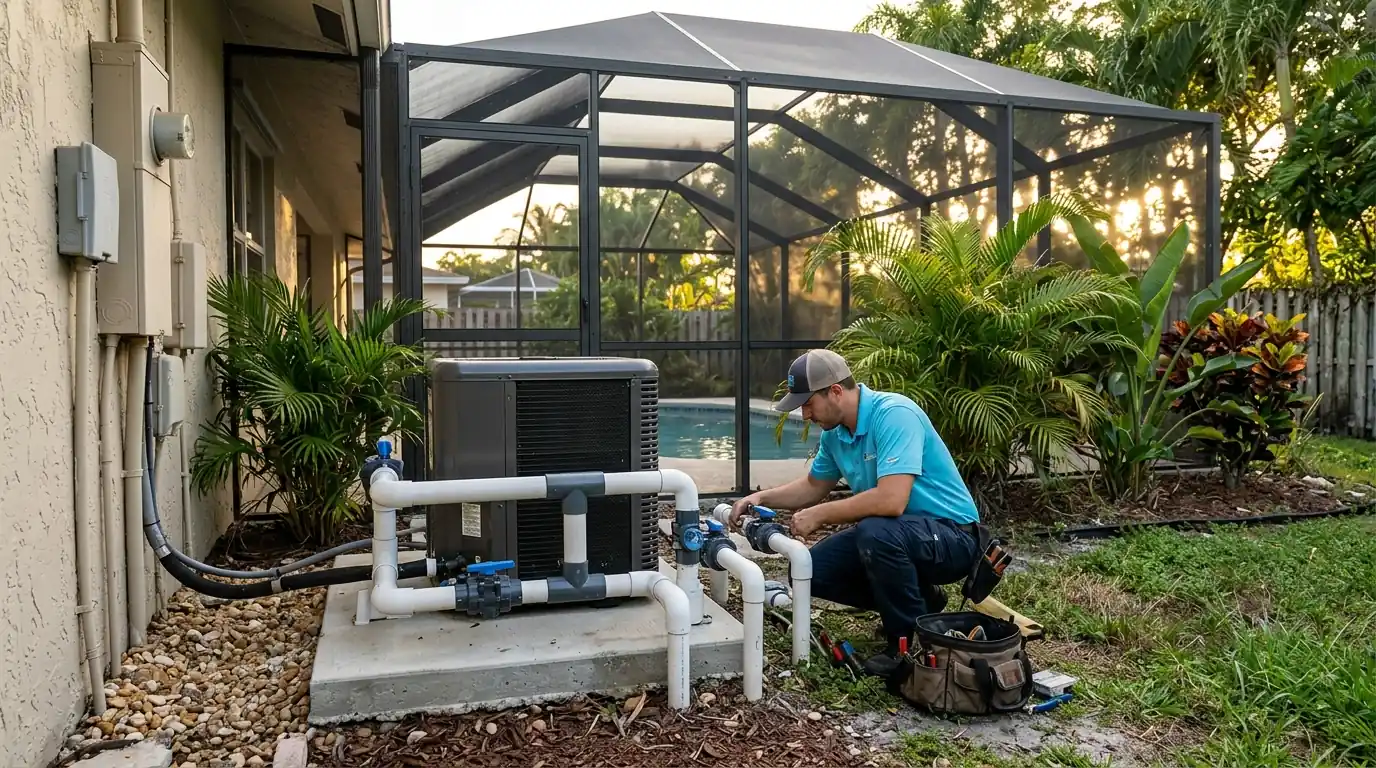
A pool heat pump is an air conditioner run backwards into water. A fan pulls outdoor air across an evaporator coil, a compressor raises the refrigerant's temperature, and a titanium heat exchanger hands that heat to the pool water as it passes through from the filter pump. It does not create heat, it moves it, which is why it uses far less electricity per degree than an electric resistance heater.
That efficiency depends on warm air, and Miami has plenty of it. Pool heat pumps lose output as the air drops into the 50s, but South Florida spends most winter days well above that, so a properly sized unit can hold a pool at a comfortable temperature through the cooler months at a running cost most owners find easy to live with.
What moves the price
What decides the price of a pool heat pump
Capacity
Sized to the pool's surface area and target temperature.
Heat exchanger
Titanium units cost more and last longer in pool water.
Electrical supply
Most units need a dedicated 240-volt circuit.
Plumbing
Tie-in after the filter, with a bypass for service.
Pad and placement
Airflow clearance and a level, raised pad.
Repair type
A fan motor costs far less than a heat exchanger.
Coastal location
Coated coils for units near salt air.
What we see on this job
Sizing a new pool heat pump
Sizing starts with the pool's surface area, because most heat leaves a pool through its surface rather than its walls. We measure the pool, ask how warm you want it and in which months, and check whether it has a cover, a spa spillover, and how much wind and shade it gets. A screened pool cage in a sheltered yard loses far less heat than an open pool on a windy corner lot. Those answers set the capacity. Undersized units run all day and never catch up in January, and oversized ones cost more than they need to. We also check the filter pump's flow, because a heat pump needs a minimum flow through its heat exchanger before it will run at all.
Pool heat pump not heating
The most common call is a unit that runs but barely warms the water, or one that shows a flow or pressure error and will not start. Low flow from a dirty filter, a closed valve or a weak pool pump trips the flow switch. Low refrigerant from a leak drops the output. Dirty evaporator coils and failed fan motors starve the unit of air. We check flow, refrigerant pressures, the fan, the compressor and the water temperature rise across the heat exchanger, then fix the cause rather than clearing the error code and leaving.
Salt, chlorine and coastal corrosion
Pool heat pumps live in harsh conditions: chlorinated or salt-system water inside the heat exchanger, and salt air outside near the coast. Titanium heat exchangers resist chemical attack far better than older cupronickel ones, but badly balanced water still damages them. Outside, coil fins and cabinet fasteners corrode just like an AC condenser. We look at both sides, the water chemistry readings from your pool service and the coil, fan and cabinet condition. When a heat exchanger has failed we compare repair against replacing the whole unit, because the exchanger is often the most expensive part in it.
What is included
What a new pool heat pump install includes
- Pool surface area measured
- Target temperature and season agreed
- Pool pump flow checked
- Dedicated electrical circuit
- Bypass valves for service
- Level, raised equipment pad
- Clearance for airflow
- Startup with temperature rise test
- Settings and run times explained
Do it yourself or call
What you can check before calling
Safe to check
- Clean or backwash the pool filter.
- Make sure the pool pump is running and the valves are open.
- Clear leaves and plants away from the unit.
- Note any error code on the display.
Leave to us
- Refrigerant leaks and pressures.
- Electrical parts and control boards.
- Heat exchanger testing and replacement.
- Fan motor and compressor work.
Most flow errors start at the pool filter, so check it first. Anything inside the cabinet is a job for a technician.
Local conditions
Why so many Miami pools need heat for only a few months
Industry estimates put Florida first in the nation with about 1.59 million residential pools, roughly one for every 14 people, and Miami-Dade backyards hold a big share of them. In summer the water heats itself, but a breezy week between December and March can drop an unheated pool into the low 70s or below. A heat pump that runs mainly in those months keeps the pool in use for most of the year.
Step by step
How a pool heat pump job runs
- 1
Measure the pool
Surface area, cover, wind and shade.
- 2
Check the pool pump
The flow the heat pump needs.
- 3
Plan the location
Airflow, drainage and service access.
- 4
Electrical and plumbing
Dedicated circuit and bypass valves.
- 5
Set and connect
Unit on a level pad, plumbed after the filter.
- 6
Start up
Flow switch, pressures and temperature rise checked.
- 7
Walk-through
Settings, run times and winter use explained.
Brands we service and install
FAQ
Questions Miami customers ask about pool heat pump installation and repair
From cold, often a day or two of steady running. After that it holds temperature with shorter run times, especially with a cover on at night.
In Miami's mild winters, usually yes, because it moves heat from the air instead of burning fuel. Gas heats faster, which is why some owners keep gas for a spa.
Usually low water flow from a dirty filter, a closed valve, a weak pool pump or a stuck flow switch.
Some models have a reverse-cycle mode that can take the edge off a hot pool. We can tell you whether your model has it.
Yes. Keep the coil clean and clear of plants, keep the pool filter clean, and have the refrigerant and electrical checked once a year.
Yes. We service most common pool heat pump brands regardless of who installed them.
Same category
Related heat pumps work we handle in Miami
Water-Source Heat Pump Repair
Condo closet and ceiling units, repair or like-for-like replacement.
Heat Pump Installation
Heat pump vs straight-cool AC, heat pump sizing for South Florida.
Heat Pump Repair
Reversing valve problems, defrost board faults.
Pool too cold to swim in January? Call us
A technician sizes or repairs the heat pump and checks the pool pump flow it depends on.