Emergency & Repair
Frozen AC coil repair in Miami: thaw it, then fix why it froze
Ice on a Miami air conditioner isn't a cold problem, it's an airflow or refrigerant problem. We thaw the coil, then meter the system to find which, because the ice returns if the cause stays.
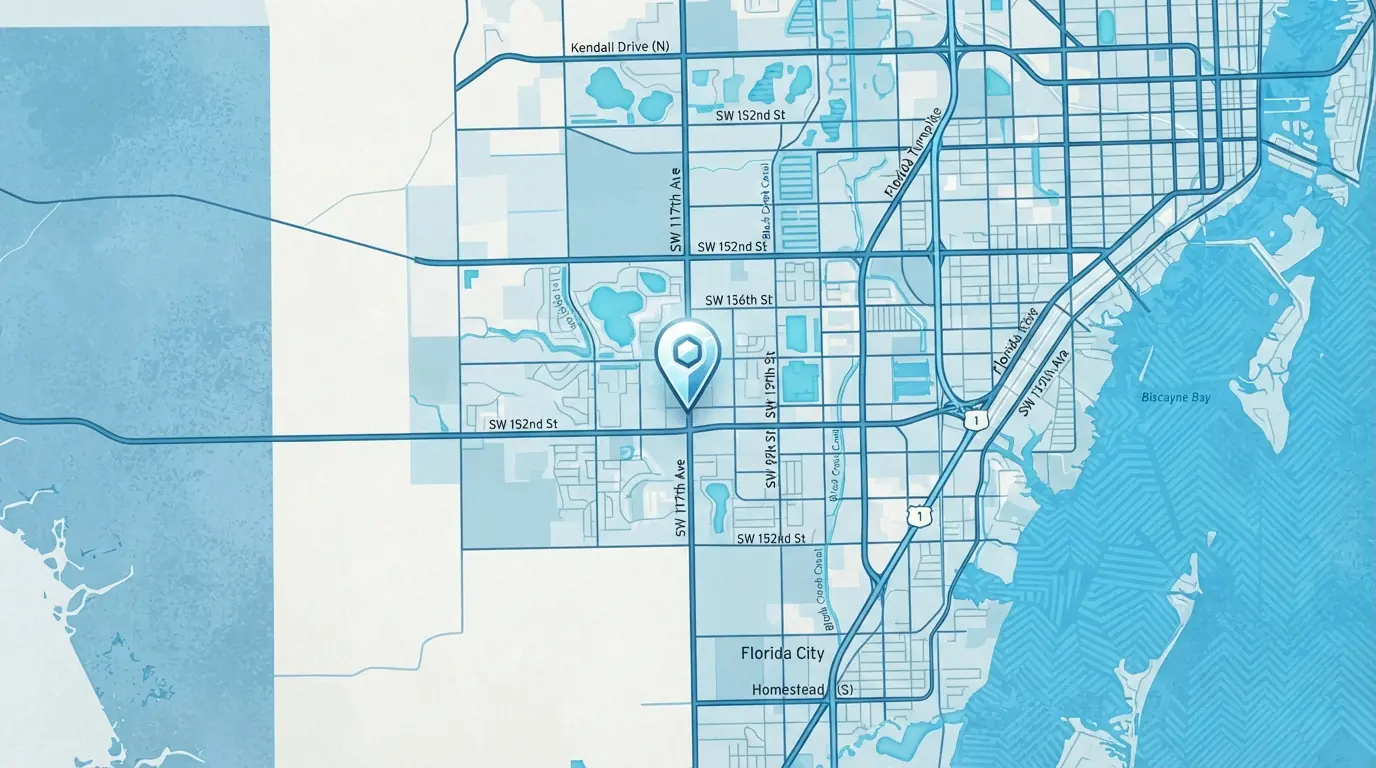
Miami service office on SW 117th Ave · We answer 24/7
- Answered 24/7
- Miami service office
- Airflow and refrigerant tests
Updated October 2026
A frozen evaporator coil in Miami is almost always caused by restricted airflow or low refrigerant, and a clogged filter is the single most common trigger. Switch the thermostat to off and the fan to on, expect one to twenty-four hours of thawing, and don't run cooling on ice because it can take out the compressor. Our technician then tests airflow and charge.
Warning signs
Signs a coil is about to freeze
Airflow weakening over a day
Ice is building and choking the coil.
Sweating line turning to frost
The refrigerant is running too cold.
Water around the air handler after shutdown
A thawing coil overflowing the pan.
Runs all night, never reaches setpoint
Ice has cut its capacity.
Filter gray and bowed
Airflow is already restricted.
Hissing at the indoor unit
Refrigerant flashing through a restriction.
Thermostat set below 70
Long cold cycles push a marginal coil into freezing.
The job
How a coil turns into a block of ice in a 90 degree city
The evaporator coil runs cold on purpose, but it depends on warm, humid air moving across it to stay above freezing. Slow that air with a clogged filter, a dirty coil, a collapsed return or a weak blower, and the coil drops below 32. Moisture freezes on the fins and within hours the coil and the suction line are white.
Low refrigerant does the same thing from the other side: less refrigerant means lower pressure and a colder coil. That's why we never just thaw and leave. Thawing fixes today; the meter reading fixes the month.
Step by step
The order we work a frozen system
- 1
Stop the freezing
Cooling off, fan on; drain checked for the meltwater.
- 2
Filter and return
The most common cause found or ruled out.
- 3
Coil and blower wheel
Coil door off, fins inspected, blower amps checked.
- 4
Airflow measured
Static pressure shows if duct is choking it.
- 5
Refrigerant charge
Superheat and subcooling once the coil is clear.
- 6
Leak search if low
Detector, then nitrogen; repair before recharge.
- 7
Run test and prevention
Supply temperature confirmed, filter schedule set.
What we see on this job
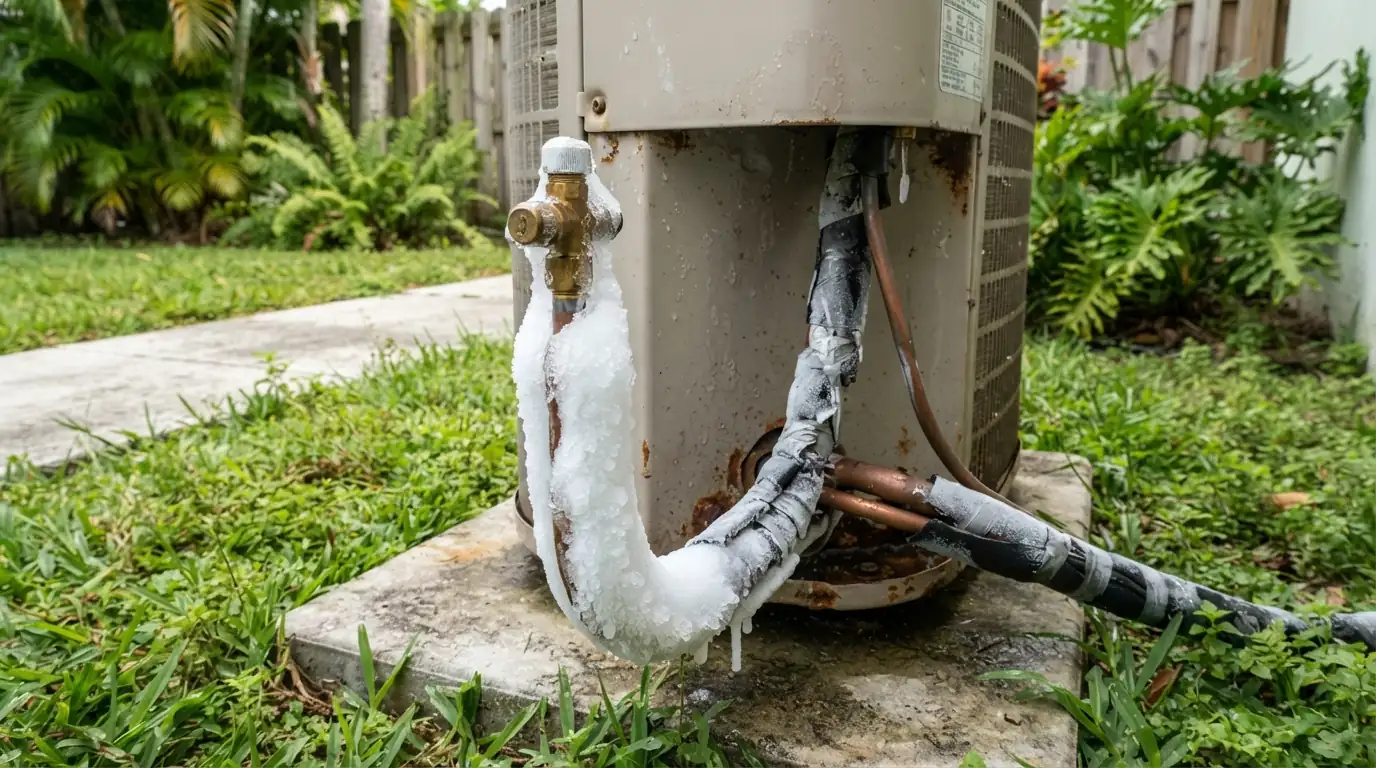
Ice on the refrigerant line outside
Frost on the larger copper line at the condenser, or a suction line that sweats hard and then ices, is the outdoor sign of the same problem. Photograph it for the technician, because where the ice starts tells us something: ice that begins at the air handler and travels out points to airflow, ice that starts at the outdoor service valve points to a restriction or low charge. Either way, shut cooling off so the technician can test rather than chip.
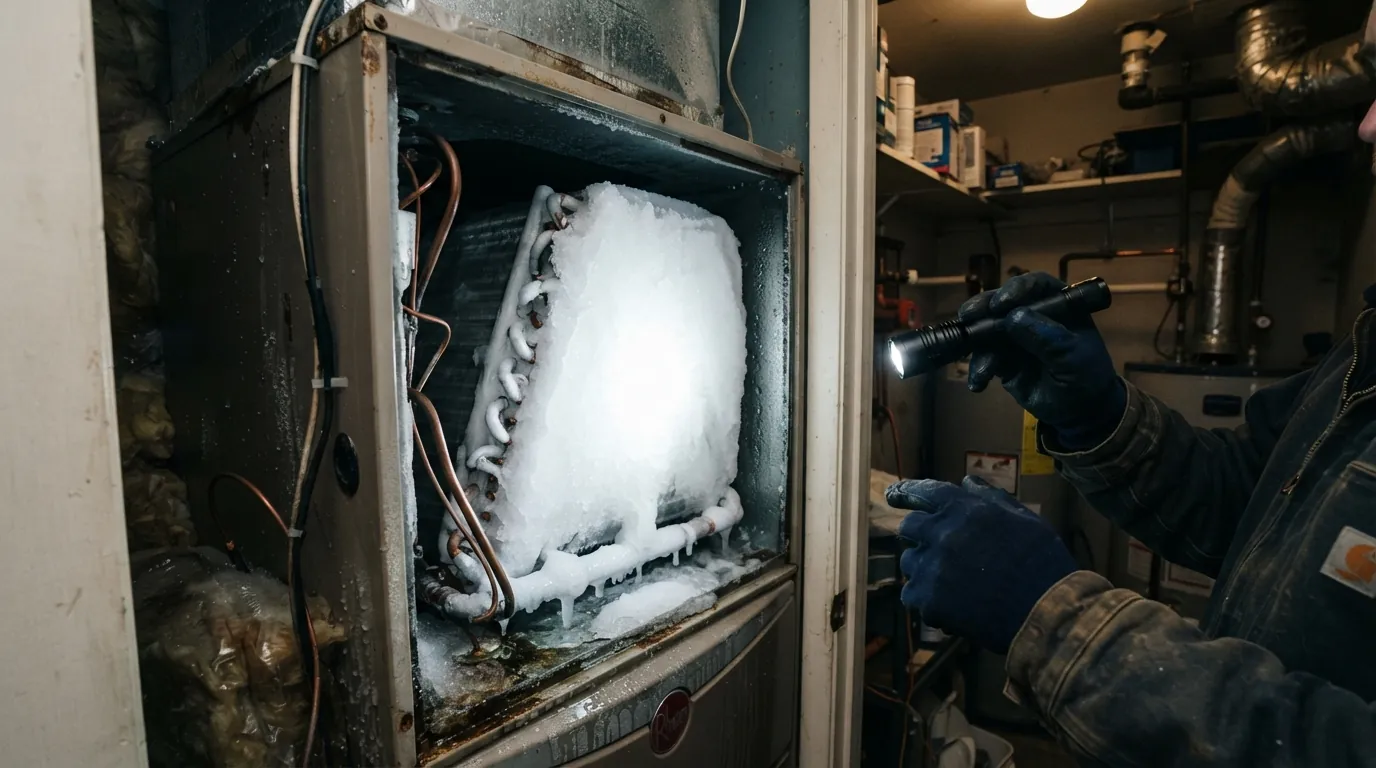
Frozen evaporator coil inside the air handler
Once the indoor coil is a solid block the system moves almost no air even with the blower running, and the pan overflows as it thaws. We thaw it with the fan running, clear the drain so the meltwater has somewhere to go, then pull the coil door and look at the fins. A coil furred with dust and mold gets cleaned before any charge is measured, because a dirty coil reads like a low charge and leads to refrigerant being added that the system doesn't need. If the coil is clean and airflow is right, we move to a leak search.
AC freezing up at night
A coil that freezes overnight but runs fine in the afternoon usually has a marginal airflow or charge problem that only shows when the outdoor temperature drops and the load falls. Miami nights in July sit near 78, so the system runs long cycles with less heat to absorb, and a coil barely above freezing at 3 p.m. slips below it at 3 a.m. Thermostat settings in the 60s make it worse. Tell dispatch when it freezes; the timing matters.
Local conditions
Why Miami coils freeze more than most
Miami's air carries relative humidity above 70 percent most of the year, so a coil that dips below freezing has plenty of moisture to turn into ice, and it happens faster here than in a dry climate. A Miami system also runs eight to ten months a year and often twelve to sixteen hours a day in summer, which means a filter installed in May is loaded by July. That's most freeze-up calls: a working system, a humid night, and a filter nobody changed.
Do it yourself or call
What to do in the first hour, and what not to
Do this now
- Thermostat off, fan on.
- Replace a dirty filter.
- Towels under the air handler.
- Open every supply vent and clear the returns.
- Photograph where the ice starts.
Don't do this
- Don't chip, scrape or pour hot water on the coil.
- Don't run cooling until every trace of ice is gone.
- Don't add refrigerant from a retail can.
- Don't set the thermostat lower to compensate.
- Don't spray coil cleaner near wet electronics.
Thawing is yours to start. Finding the cause takes a static pressure reading and a refrigerant test, and that's the technician's part.
What moves the price
What a freeze-up repair ends up costing
Planning range: Common AC repairs in Miami: $150-$600 in published 2026 guides. A market range, not our quote.
Airflow or refrigerant
A filter and cleaning is low; a leak and recharge is high.
Coil cleaning
Florida guides put it at $100 to $400.
Leak repair
A pinholed coil may need replacing, not patching.
Refrigerant added
Per pound, after the leak is fixed.
Blower faults
A weak blower or bad capacitor is part of the fix.
Duct problems
A crushed return is a separate repair.
Damage from running on ice
A compressor that slugged liquid changes things.
FAQ
Questions Miami customers ask about frozen AC coil repair
No. Fins bend and the coil can puncture. Fan-only thaws it safely in one to twenty-four hours.
An hour to a full day depending on the ice. The fan running with cooling off speeds it along.
Only if low charge was the cause, and only after the leak is repaired. Adding it to a system freezing from dirty airflow overcharges it.
A very high MERV filter can restrict airflow on a blower not designed for it. We check static pressure and recommend the right filter.
Running it on ice risks the compressor, so shut cooling off, run the fan, and we can usually see it the same day.
Rarely. Most freeze-ups are a filter, a dirty coil or a small leak. A leaking coil on an old R-22 system is where replacement gets discussed.
Same category
Related emergency work we handle in Miami
AC Repair
AC blowing warm air, AC tripping the breaker.
Refrigerant Leak Repair
Refrigerant recharge, older R-22 systems.
AC Drain Line Cleaning
Clogged condensate drain, float switch shutting the AC off.
Ice on the line in Miami? Shut it off and call
Switch to fan-only, and a technician from the Miami office finds whether it's airflow or refrigerant before the ice comes back.