Emergency & Repair
Refrigerant leak repair in Miami, not another recharge
A system that needs refrigerant every summer has a leak, and every recharge without a repair evaporates into the yard. We find the leak, fix the part, and charge the system once.
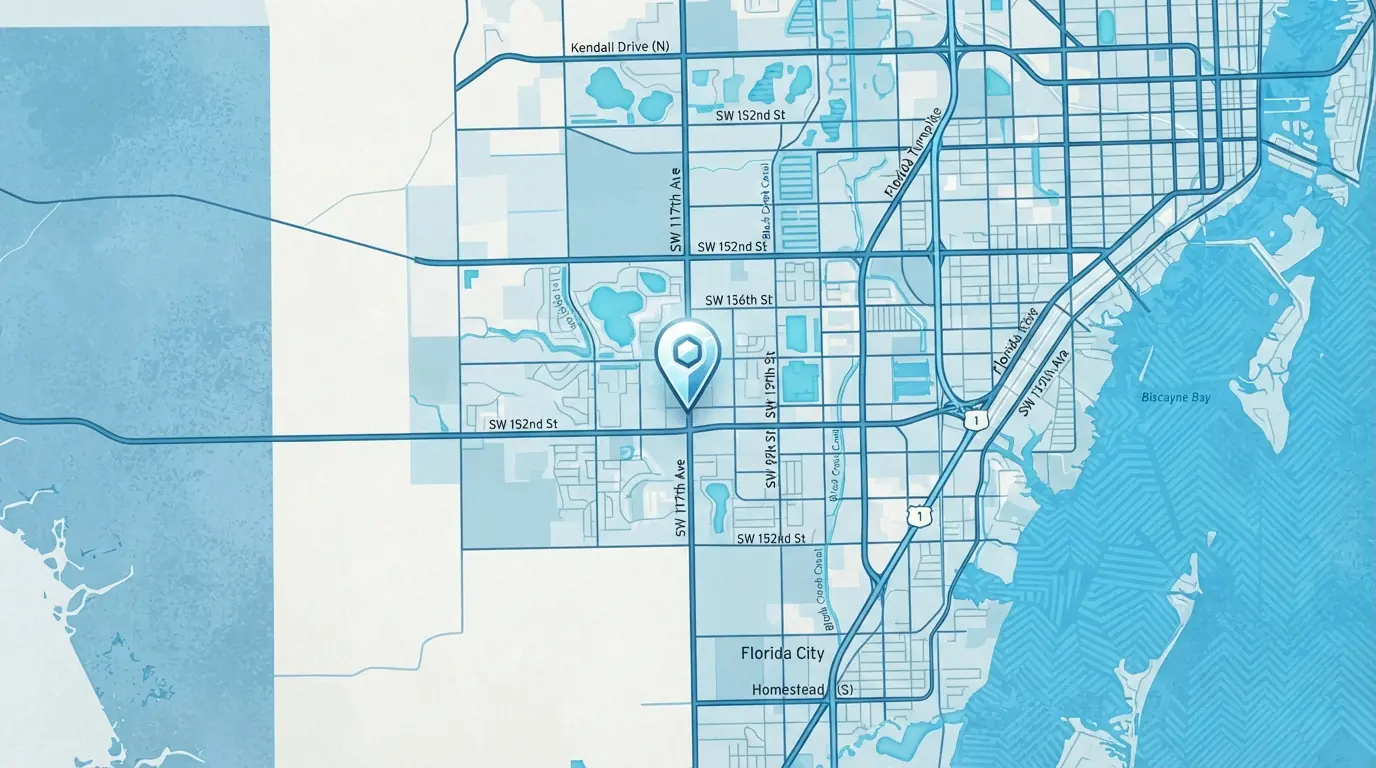
Miami service office on SW 117th Ave · We answer 24/7
- Answered 24/7
- Miami service office
- Leak search before any charge
Updated October 2026
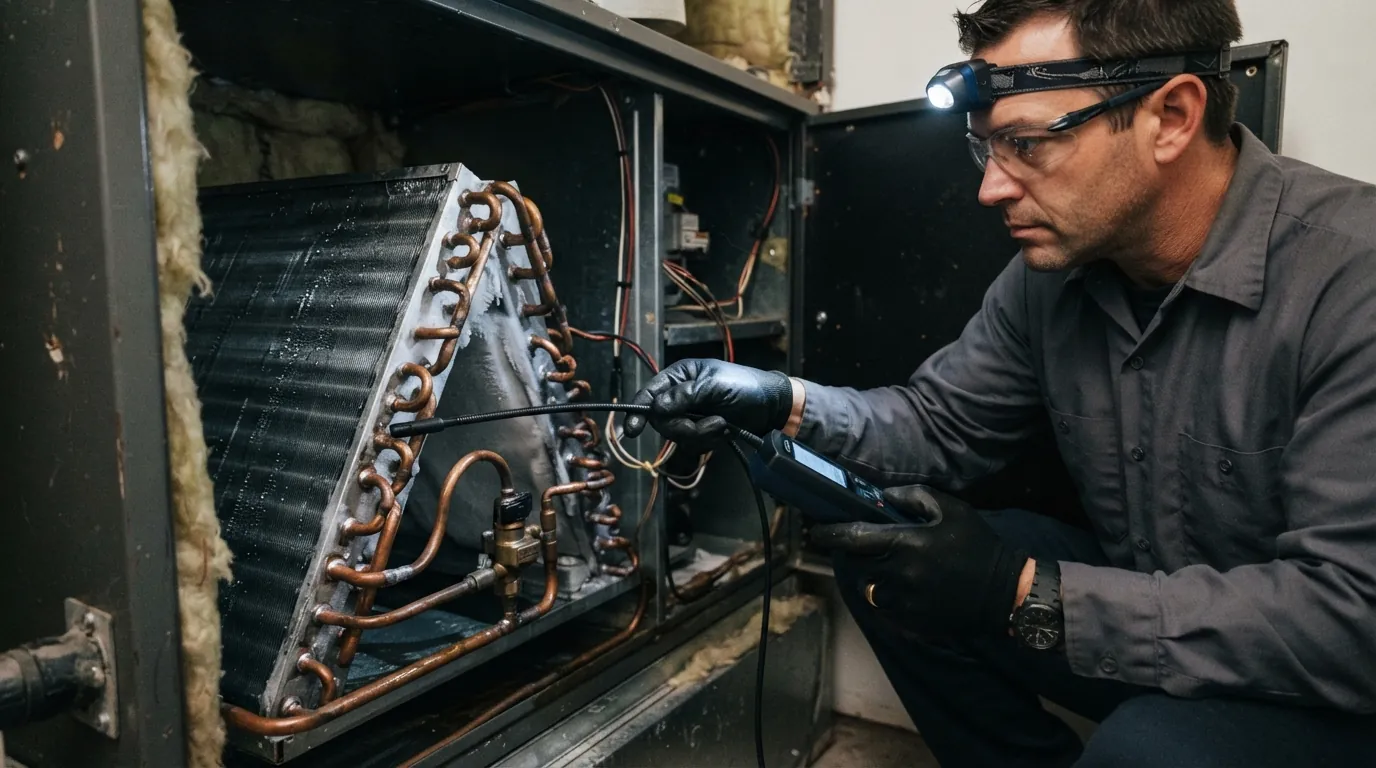
Refrigerant leak repair in Miami means finding the leak first: a technician from our SW 117th Ave office pressure-tests the system, uses an electronic detector and dye where needed, repairs or replaces the leaking coil, valve or line, and only then charges it. Published Miami figures put R-410A at $100 to $150 a pound, so a repair beats a yearly top-off within two summers.
The job
Where Miami systems leak and why topping off costs more
Refrigerant doesn't get used up. A low system has a hole somewhere, and in Miami the usual suspects are the evaporator coil (formicary corrosion from humid indoor air), the condenser coil (salt attack near the water), Schrader valve cores, brazed joints on the line set, and rub-throughs where a line touches the cabinet.
A top-off feels cheaper because it's one visit. It isn't: the leak keeps going, the compressor runs undercharged and hot between visits, and it dies early. On R-22 systems the refrigerant is scarce enough that a leak usually ends the repair conversation and starts the replacement one.
Step by step
How we find a leak and close it
- 1
Confirm it's low
Superheat and subcooling under load, not a guess.
- 2
Visual search
Oil stains at joints, valves and coil bends.
- 3
Electronic detection
Coils, service ports and every brazed joint.
- 4
Nitrogen pressure test
When the detector finds nothing.
- 5
Repair or replace
Cores and flares on the spot; coils as a return.
- 6
Evacuate and charge by weight
Deep vacuum, nameplate charge verified.
- 7
Document it
Leak location, pounds added and readings.
What we see on this job
Refrigerant recharge, done once after the repair
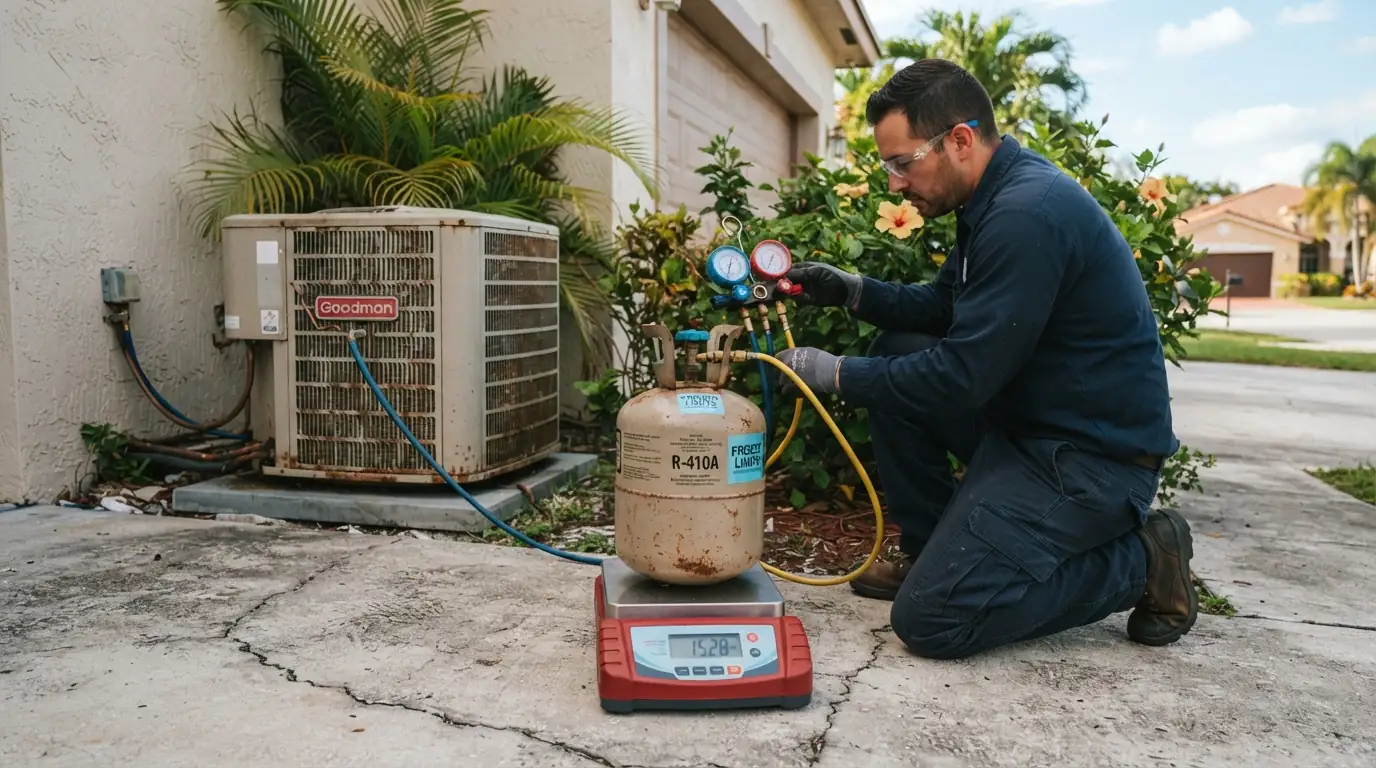
Charging is the last step, not the first. After the leak is repaired we pull the system into a vacuum to remove moisture and air, then weigh the charge in to the nameplate amount and confirm it with superheat and subcooling readings under load. A system charged by feel in Miami's heat is usually overcharged, which raises head pressure and shortens compressor life. You get the weight added and the readings in the write-up. If a full search finds no leak on a slightly low system, we say so plainly rather than invent one.
R-410A leak search on newer systems
Most Miami systems installed since 2010 run R-410A. The search starts with a visual for oil residue at joints and valves, then an electronic detector along the coils, line set and service ports. If nothing shows we isolate the system and pressure-test with nitrogen, which finds leaks a detector misses on a windy afternoon. UV dye is the last resort because it takes days to circulate. Schrader cores and flare nuts are five-minute repairs. A leaking evaporator coil is a coil replacement, and on a newer system that's the right call rather than a full replacement.
Older R-22 systems and the honest answer
R-22 hasn't been produced or imported since 2020, so what's left is reclaimed and expensive. A leaking R-22 system in Miami is almost always past the point where a repair makes sense: the leaking coil is the same age as the compressor, the charge alone can run several hundred dollars, and the system was built for a refrigerant you can't buy at a fair price. We'll still repair a small valve leak if you want another season, but the technician puts the replacement number beside it so you choose with both in front of you.
Timing
How long until you have cooling again
Valve cores, flare nuts and accessible joints are repaired, evacuated and charged in the same visit, usually two to three hours including the search. A leaking coil is ordered and installed on a scheduled return, and on those we get you what cooling the system can safely give in the meantime.
Local conditions
Leaks near the water and leaks in the attic
Near the water in Miami the condenser is where leaks start: aluminum fins corrode and copper develops pinholes from salt attack, which is why Carrier, Trane, Lennox and Daikin offer coastal-rated condensers with factory coatings, and why a post-install coil coating runs around $150 to $350 in published Miami figures. Away from the coast, the evaporator coil in a hot attic is the usual leak. Both get the same search; the recommendation afterward changes with the address.
Your options
Repair, top off, or replace: how the three compare
| Repair the leak | Top off only | Replace the system | |
|---|---|---|---|
| When it fits | Findable leak, system under about 12 years | Slightly low, no leak after a full search | R-22, or a leaking coil on an old system |
| What you pay | Search, part and one charge | Refrigerant by the pound, again next year | New equipment, permit and install |
| Risk | Low once repaired | Compressor runs undercharged between visits | Highest up front, lowest over ten years |
The technician writes all three numbers on one sheet when they apply, so you choose with the figures in front of you.
What moves the price
What a leak repair costs versus another top-off
Planning range: R-410A refrigerant per pound: $100-$150 per pound in published 2026 guides. A market range, not our quote.
Where the leak is
A valve core is minutes; a coil is a part and hours.
Refrigerant type
R-410A by the pound; R-22 far higher.
Pounds required
A 3-ton system holds roughly six to ten.
Search method
Detector, nitrogen or dye take different time.
Coil versus joint
A pinholed coil is replaced; a joint is brazed.
System age
Priced beside the replacement figure.
Coastal protection
A coated condenser is a separate line.
FAQ
Questions Miami customers ask about refrigerant leak repair
On a slightly low system with no findable leak, yes. On one that's needed it before, a top-off without a repair is money thrown away, and we'll say so first.
Published 2026 guides put R-410A at about $100 to $150 a pound. R-22 is reclaimed stock priced well above that.
Not like a gas leak, but it displaces air in a closed space and an undercharged system can freeze and damage the compressor.
Usually an hour. Nitrogen adds time, and dye needs days of runtime before a follow-up.
Formicary corrosion on evaporator coils starts early in humid climates. A newer coil is usually replaced under its parts warranty.
A repaired joint or replaced part, yes. A coil with several pinholes is replaced, because the next pinhole is already forming.
Same category
Related emergency work we handle in Miami
Evaporator Coil Replacement
Leaking evaporator coil, coil vs full air handler decision.
AC Motor and Capacitor Replacement
Capacitor replacement, contactor replacement.
Thermostat Repair and Replacement
Smart thermostat installation, c-wire and wiring fixes.
Stop paying for refrigerant that leaks into the yard
Call the Miami office, and the technician finds the leak, repairs it, and charges the system once.