Maintenance & Tune-Ups
Hurricane season AC prep for Miami homes and businesses
A hurricane can knock a condenser off its pad, flood it, or send a surge through it when the power comes back. We check the anchoring, the pad and the electrical before the season and inspect the system after a storm, before it's switched back on.
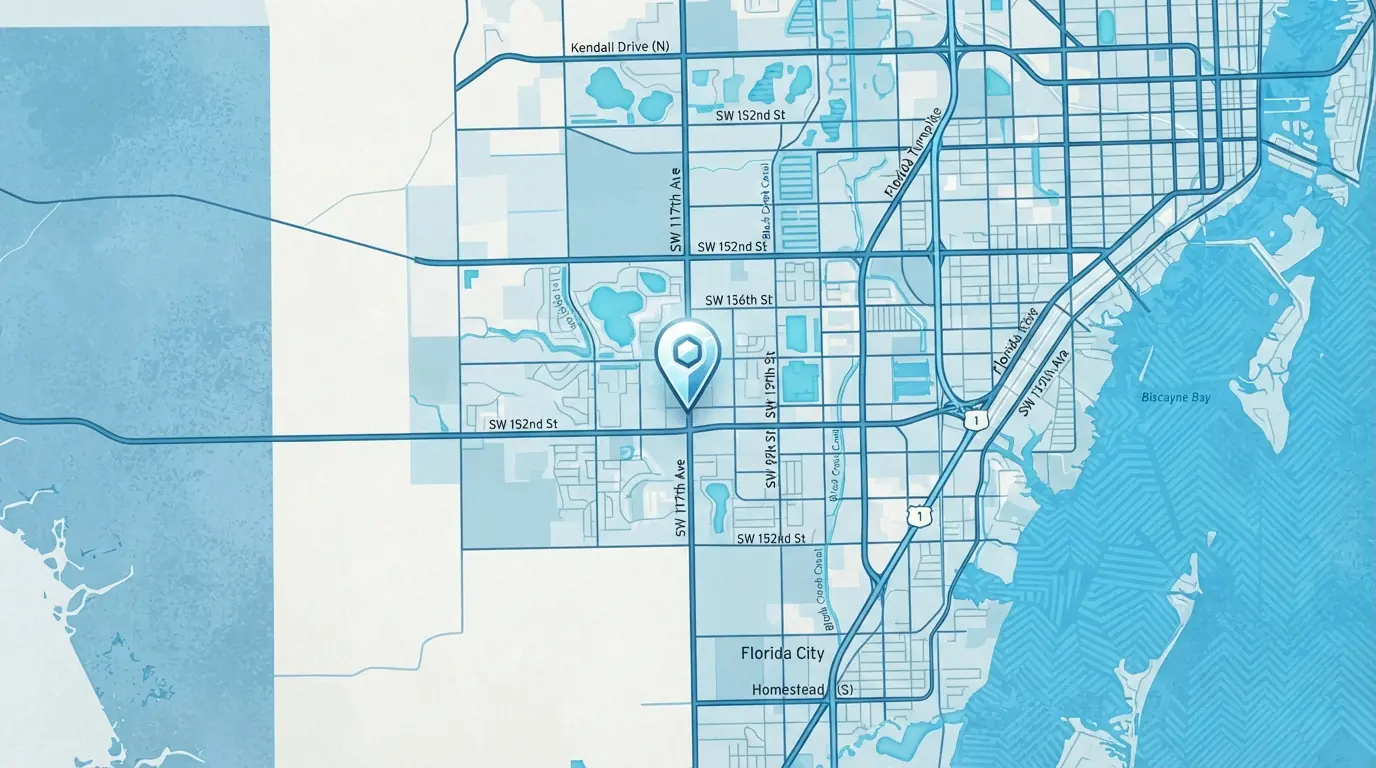
Miami service office on SW 117th Ave · We answer 24/7
- Answered 24/7
- Miami service office
- Pre-storm and post-storm
Updated October 2026
Hurricane season AC prep in Miami checks that the outdoor unit's tie-downs and pad are sound, that the disconnect and wiring are secure, that surge protection is in place, and that the drain is clear for the wettest months. After a storm, a technician from our SW 117th Ave office inspects for flood, wind and salt damage before the system is restarted.
The job
What storms do to air conditioners
Wind is the obvious threat: an unanchored or corroded tie-down lets a condenser tip or slide, kinking the line set and tearing the wiring. Flooding is the quieter one: water that reaches the base pan and electrical components can ruin a unit that looks fine afterward.
Then there's the power. Outages and restorations send surges through anything plugged in, and the compressor and control board are expensive to replace. Prep before the season, and an inspection before restarting afterward, avoid most of it.
What is included
What our storm prep covers
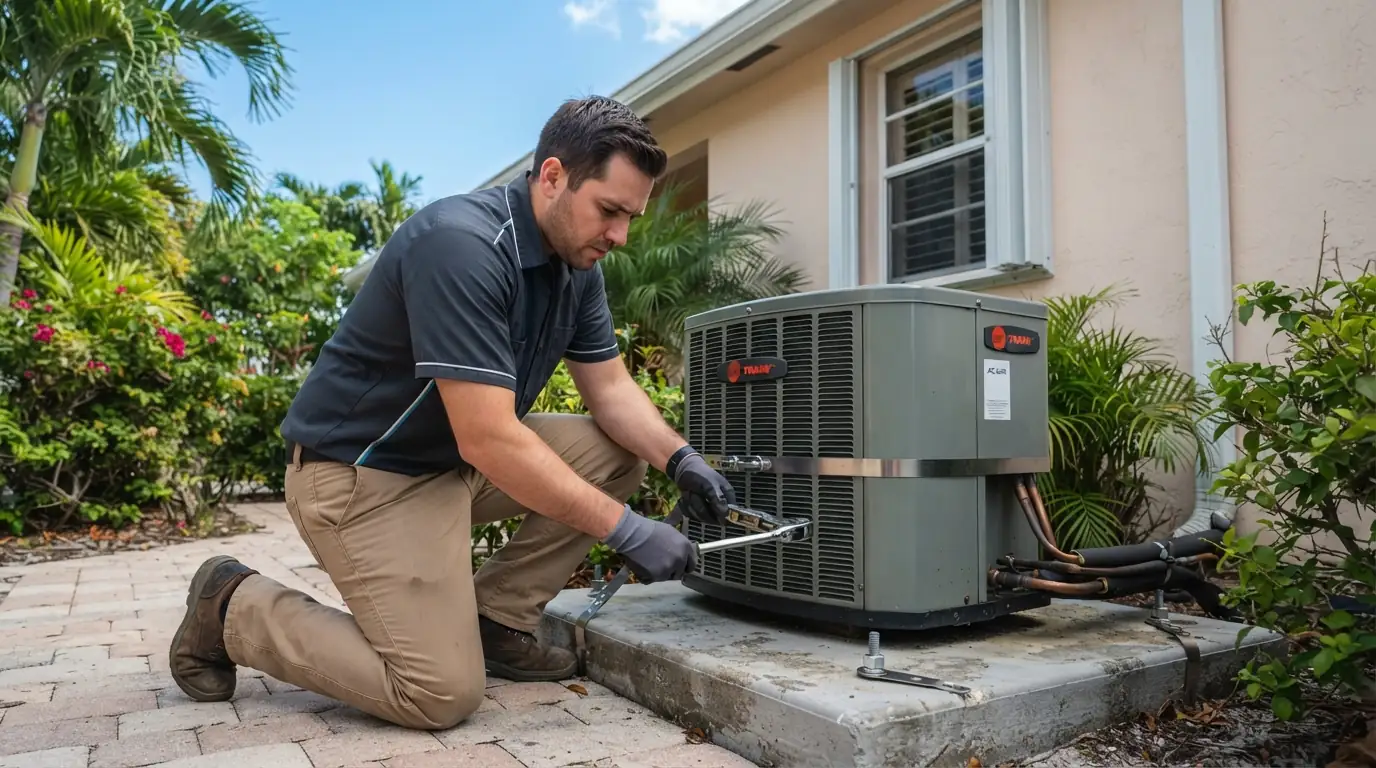
- Tie-downs and anchor bolts inspected
- Corroded hardware replaced with wind-rated straps
- Pad or rooftop curb checked
- Flood risk at the unit assessed
- Disconnect and wiring checked for corrosion
- Surge protector checked or installed
- Drain flushed and float switch tested
- Shutdown and restart steps explained
- Post-storm inspection available on call
What we see on this job
Condenser tie-downs
Miami-Dade requires outdoor units to be anchored to their pads with approved hardware, but tie-downs rust, loosen and sometimes were never installed. We check every strap and bolt, replace corroded hardware with wind-rated tie-downs, and look at the pad itself: a cracked or sunken pad won't hold an anchor. Rooftop units get the same check on their curbs and straps. If the unit sits where water pools in heavy rain, we'll recommend raising it before the season rather than after a flood.
Post-storm inspection
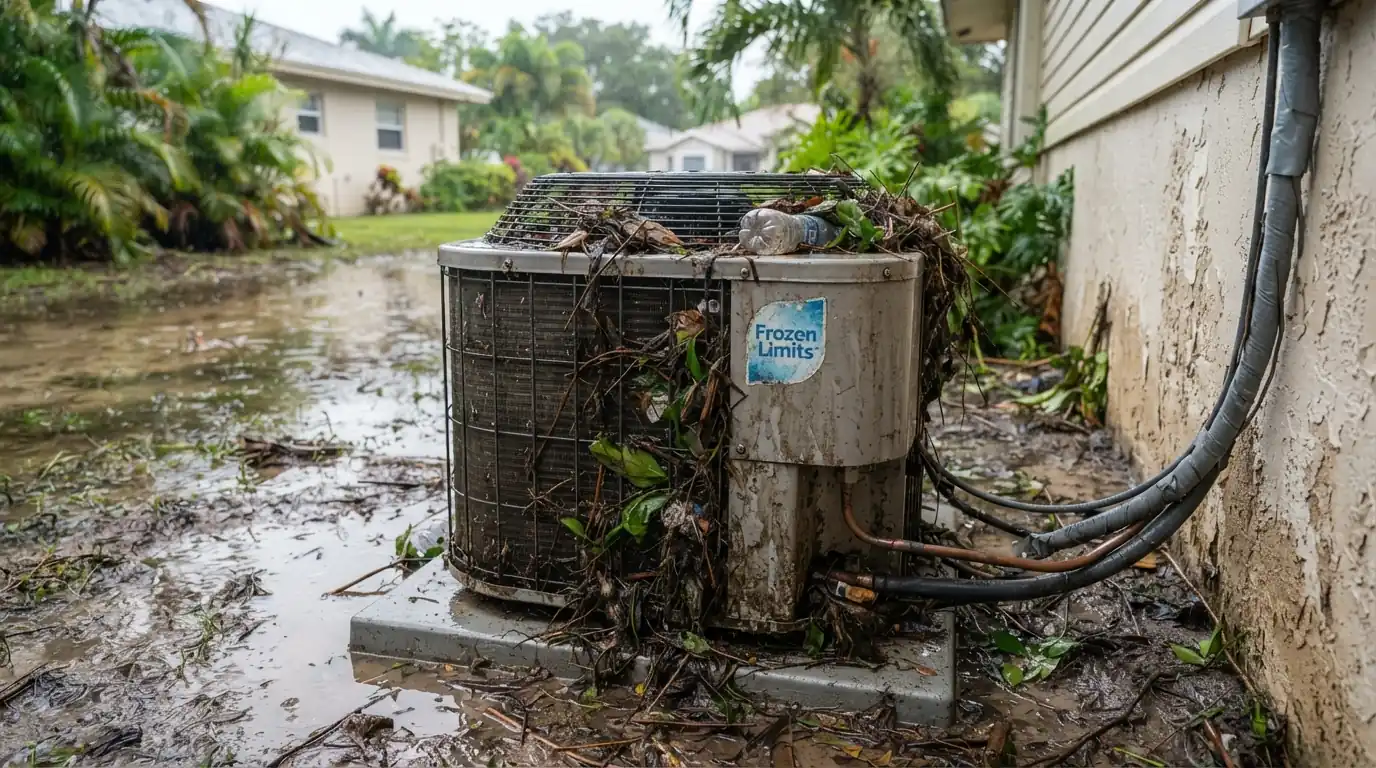
After a storm, don't switch the AC back on until someone has looked at it. We check whether the outdoor unit moved on its pad, whether the line set is kinked or the insulation torn, whether water reached the electrical components or the base pan, and whether salt spray has coated the coil. We rinse salt off the coil, test the electrical before energizing, and restart the system only when it's safe. Flooded units are tested properly before anyone recommends replacing them.
Surge protection for the AC
A dedicated surge protector at the outdoor unit's disconnect helps protect the compressor and control board from the spikes that come with lightning and with power returning after an outage. It's a small part compared with a compressor or an inverter board. We check the disconnect and wiring for corrosion and loose connections at the same time, because a loose lug can arc and fail under load. We also explain how to switch the system off before a storm and when it's safe to switch it back on.
Local conditions
Flooding and rain in Miami's storm season
In coastal Miami neighborhoods, grade-level condensers face storm surge and flooding as a primary way they fail, and salt left on coils after a storm drives corrosion in the weeks that follow. The season also lines up with the wettest months, when rainfall rises from about 5 inches in May to nearly 10 inches in June and September, so drains and float switches get checked in the same visit.
Step by step
How storm prep and post-storm checks run
- 1
Inspect the anchoring
Tie-downs, bolts, pad or curb.
- 2
Check the site
Where water pools in heavy rain.
- 3
Electrical and surge
Disconnect, wiring and protector.
- 4
Clear the drain
Before the rainiest months.
- 5
Walk you through shutdown
When to switch off and back on.
- 6
After the storm
Movement, flooding and salt checked.
- 7
Safe restart
Electrical tested before energizing.
Do it yourself or call
Before and after the storm: what you can do
Before the storm
- Switch off at the thermostat and the breaker.
- Clear loose items away from the unit.
- Photograph the unit for insurance.
- Know where the outdoor disconnect is.
After the storm, call before restarting if
- Water reached the unit.
- The unit moved or tilted on its pad.
- Lines look kinked or insulation is torn.
- There's debris inside the fan guard.
Switching off and clearing the yard is yours. Restarting a unit that was hit, flooded or salted needs an electrical check first.
What moves the price
What decides the cost of storm prep
Tie-down replacement
Corroded hardware swapped for wind-rated straps.
Pad condition
Cracked or sunken pads replaced or raised.
Surge protection
A protector installed at the disconnect.
Electrical repairs
Corroded lugs or wiring fixed.
Rooftop units
Curb and strap checks on the roof.
Drain service
Flushed before the wettest months.
Post-storm damage
Priced after inspection.
FAQ
Questions Miami customers ask about Hurricane season AC prep
Yes. Switch it off at the thermostat and the breaker before the storm and leave it off until it's checked.
Only while it's off, and remove the cover before restarting. A covered unit can't breathe.
If the hardware is rusted, loose or missing, yes. Miami-Dade requires approved anchoring.
Not always. Don't run it; have the electrical tested and the unit inspected first.
It helps protect the compressor and control board from spikes during outages and restoration.
Yes, including rinsing salt off the coil before restarting.
Same category
Related maintenance work we handle in Miami
AC Tune-Up
Pre-summer tune-up, refrigerant and electrical checks.
AC Maintenance Plan
Twice-yearly visits, booking before the summer rush.
Mini Split Cleaning
Wall-mounted head deep cleaning, outdoor unit and drain service.
Get the AC ready before the next storm
Call the Miami office to book a pre-season check, or a post-storm inspection before you restart.