Maintenance & Tune-Ups
Coastal condenser coil coating for Miami homes near the water
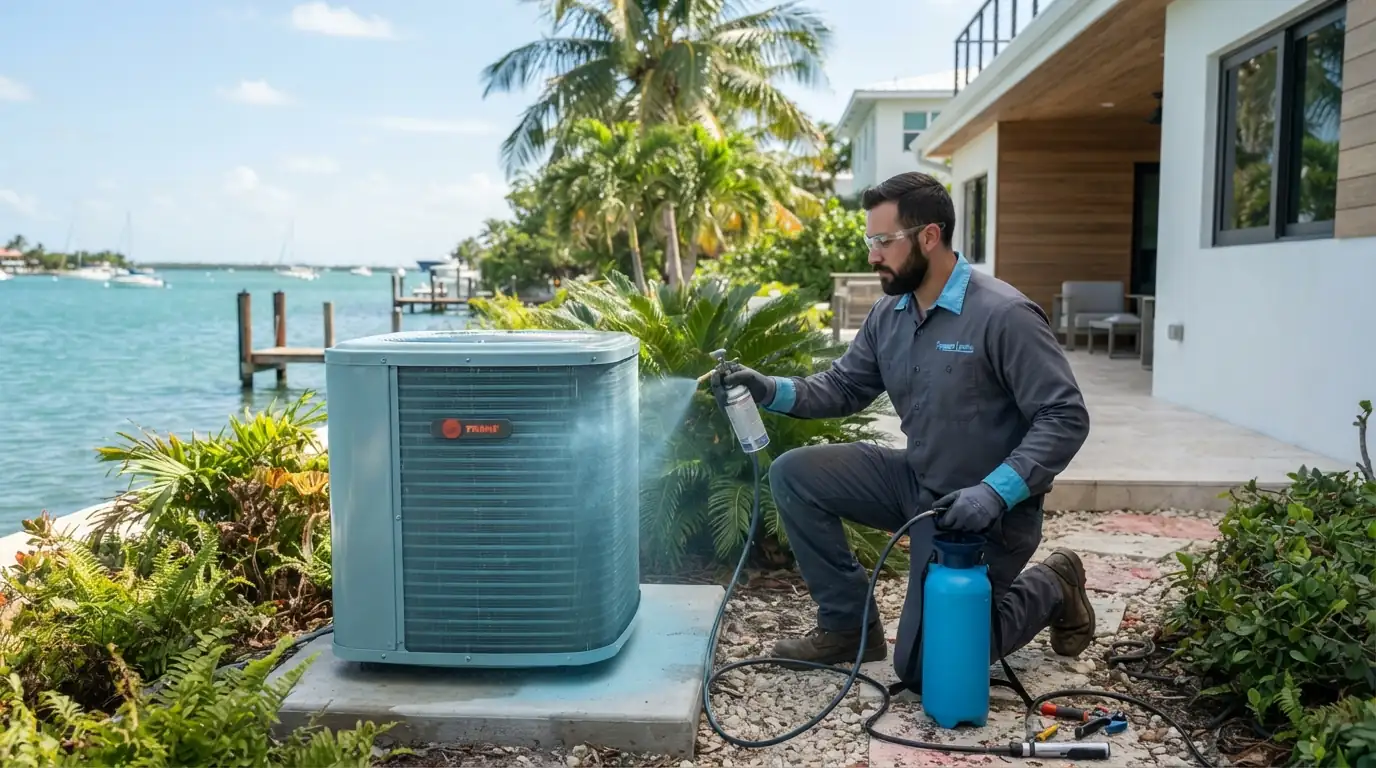
Salt air eats the thin aluminum fins and copper tubes of an outdoor coil. A protective coating, applied to a new unit or a clean existing one, slows that corrosion and helps the condenser last.
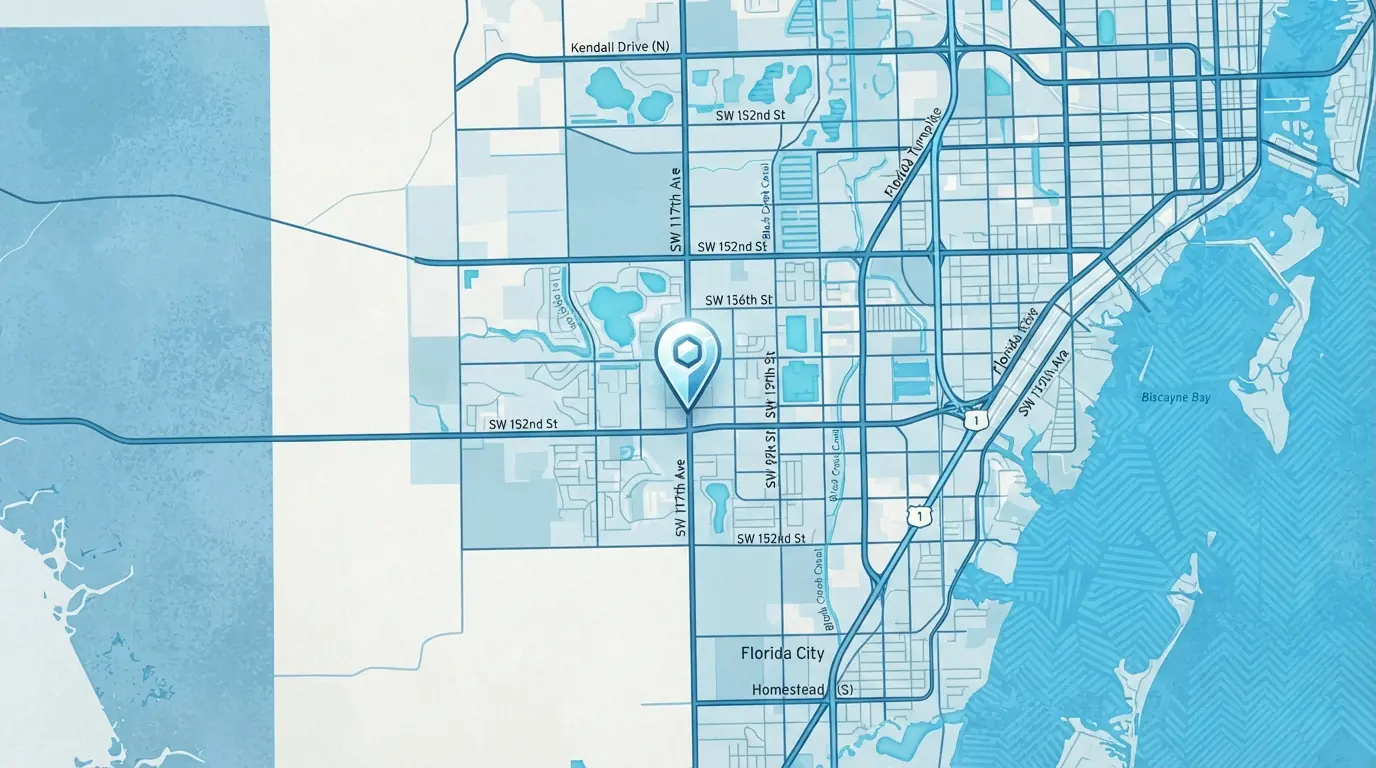
Miami service office on SW 117th Ave · We answer 24/7
- Answered 24/7
- Miami service office
- New or existing units
Updated October 2026
Coastal condenser coil coating in Miami applies a protective coating to the outdoor unit's aluminum fins and copper tubes to slow salt corrosion, and published Miami figures put a post-install coating at about $150 to $350. A technician from our SW 117th Ave office cleans the coil first, applies the coating evenly without blocking airflow, and sets a rinse and inspection schedule.
The job
What salt air does to a condenser
The condenser coil is a thin aluminum fin pack wrapped around copper tubes, and air is pulled through it all day. Near the water, that air carries salt that settles on the fins, holds moisture and eats the aluminum, and eventually pits the copper until it leaks.
A coated coil resists that attack. The coating doesn't make a condenser salt-proof, but combined with regular rinsing it slows the damage and helps avoid an early coil or condenser replacement.
What is included
What a coil coating visit includes
- Coil and copper inspected
- Honest worth-it assessment
- Thorough cleaning and salt removal
- Bent fins straightened
- Coating applied to face and edges
- Cure time respected
- Airflow and head pressure checked
- Rinse schedule set with you
- Coating inspected at maintenance visits
What we see on this job
Coating a new condenser
The best time to coat a coil is when it's new and clean. Some manufacturers offer coastal-rated units with factory coatings; where the chosen unit doesn't have one, a post-install coating can be applied before salt has started its work. We coat the full coil face and edges, let it cure as the product requires, and confirm the unit's airflow and head pressure afterward. On a replacement near the water, we'll quote the coating alongside the equipment so you can decide at the same time, while the coil is still clean and bright.
Coating an existing coil
An existing coil can be coated if it's still in reasonable condition. It has to be cleaned thoroughly first: salt, dirt and corrosion products are washed out, bent fins are straightened with a fin comb, and the coil is allowed to dry completely before anything goes on it. Coating over salt or heavy corrosion traps the damage underneath. If the fins are already crumbling or the copper is leaking, coating isn't worth the money, and we'll tell you honestly that the coil or the condenser needs replacing instead.
Salt rinse and inspection schedule
Coated or not, a coastal condenser benefits from a regular freshwater rinse to wash salt off before it builds up, especially after storms and windy stretches. We set a rinse schedule with you, show you how to rinse gently from the inside out with the power off, and inspect the coating, fins and copper at maintenance visits. Spotting early corrosion at a maintenance visit lets us deal with it before it becomes a refrigerant leak and a much bigger bill.
Local conditions
Coastal homes near Biscayne Bay
In Lakes by the Bay, the Cutler Bay neighborhood just east of US 1 near Biscayne Bay, and other homes close to the water, condensers sit in salt-laden air every day. That is where a coil coating and a regular freshwater rinse earn their keep, because the alternative is a coil that pits and leaks years before the rest of the system is worn out.
Step by step
How a coil coating runs
- 1
Inspect the coil
Fins, copper and corrosion.
- 2
Decide if it's worth coating
Honest call on older coils.
- 3
Clean thoroughly
Salt and dirt washed out.
- 4
Straighten fins
Airflow restored.
- 5
Apply the coating
Full face and edges, even coat.
- 6
Cure and check
Airflow and head pressure confirmed.
- 7
Set the rinse schedule
Rinse and inspection plan.
Your options
Coastal-rated unit, post-install coating or neither
| Coastal-rated unit | Post-install coating | No coating | |
|---|---|---|---|
| Protection | Factory coating | Applied coating | Bare aluminum |
| Best when | Replacing near the water | New or clean existing coil | Well inland, away from salt |
| Upkeep | Regular rinsing | Regular rinsing, inspections | Standard maintenance |
Near the water, some protection plus rinsing almost always costs less than an early coil replacement.
What moves the price
What decides the price of a coil coating
Planning range: Post-install coil coating for coastal condensers: $150-$350 in published 2026 guides. A market range, not our quote.
Coil size
Larger condensers need more coating.
New or existing
Existing coils need thorough cleaning first.
Coil condition
Corroded coils may not be worth coating.
Fin repair
Bent fins straightened before coating.
Access
Tight side yards and rooftops.
Cure time
Depends on the product.
Rinse schedule
Set up with you after coating.
FAQ
Questions Miami customers ask about coastal condenser coil coating
Published Miami figures put a post-install coating at about $150 to $350.
No, it slows corrosion. Regular rinsing still matters.
If it's still in reasonable condition and cleaned first. Badly corroded coils aren't worth it.
A properly applied coating shouldn't noticeably affect airflow or performance.
Regularly near the water, and after storms and windy stretches.
When replacing, it's worth pricing; otherwise coat the new unit.
Same category
Related maintenance work we handle in Miami
Mini Split Cleaning
Wall-mounted head deep cleaning, outdoor unit and drain service.
Hurricane Season AC Prep
Condenser tie-downs, surge protection for the AC.
HVAC Inspection
Pre-purchase HVAC inspection, landlord and turnover inspections.
Condenser near the water? Protect the coil
Call the Miami office to have the coil inspected, cleaned and coated.