Installation & Replacement
AC zoning in Miami for homes with hot and cold rooms
One thermostat can't satisfy a two-story house, a sunny addition and a cool interior hallway at the same time. Zoning splits the duct into areas with their own thermostats, so each part of the house gets what it needs.
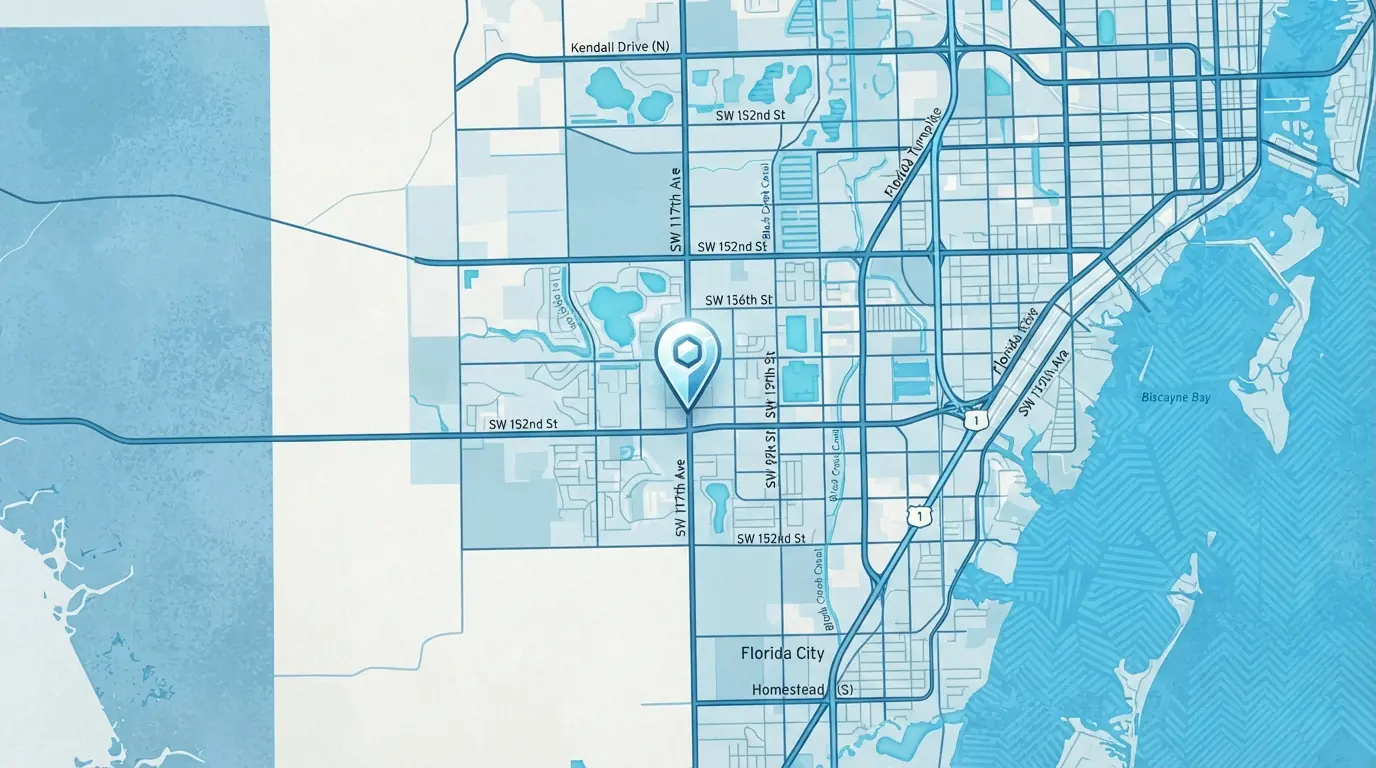
Miami service office on SW 117th Ave · We answer 24/7
- Answered 24/7
- Miami service office
- Static pressure checked
Updated October 2026
AC zoning in Miami divides one duct system into two or more areas, each with its own thermostat and a motorized damper that opens and closes the duct to it. A technician from our SW 117th Ave office checks whether the system and duct can handle zoning, measures static pressure, and designs the zones so closed dampers don't overload the blower.
The job
When zoning solves the problem and when it doesn't
Zoning fits houses where the uneven temperatures come from how the house is used and where the sun hits it: an upstairs that gains heat all afternoon, a bedroom wing that needs cooling at night while the living areas don't. With zones, the system sends air where it's asked for.
Zoning doesn't fix a system that is undersized or duct that leaks into the attic. Those need to be fixed first, and we'll tell you when that's the real problem.
Your options
Zoning, a mini split or a second system
| Zoning | Mini split | Second system | |
|---|---|---|---|
| Best for | A floor or wing that runs hot | One room or addition | Large homes with two floors |
| Uses existing duct | Yes | No | New duct for the second system |
| Cost | Moderate | Moderate per room | Highest |
The right fix depends on how much of the house is uncomfortable and how sound the existing duct is.
What moves the price
What decides the price of a zoning system
Number of zones
Each zone adds a damper and thermostat.
Duct access
Attic and closet access for damper installation.
Duct type
Round, rectangular or duct board dampers.
System type
Variable-speed systems zone best.
Static pressure fixes
Relief or duct changes when needed.
Control panel
Stage and heat pump compatibility.
Thermostat locations
New wire runs to each zone.
What we see on this job
Motorized dampers
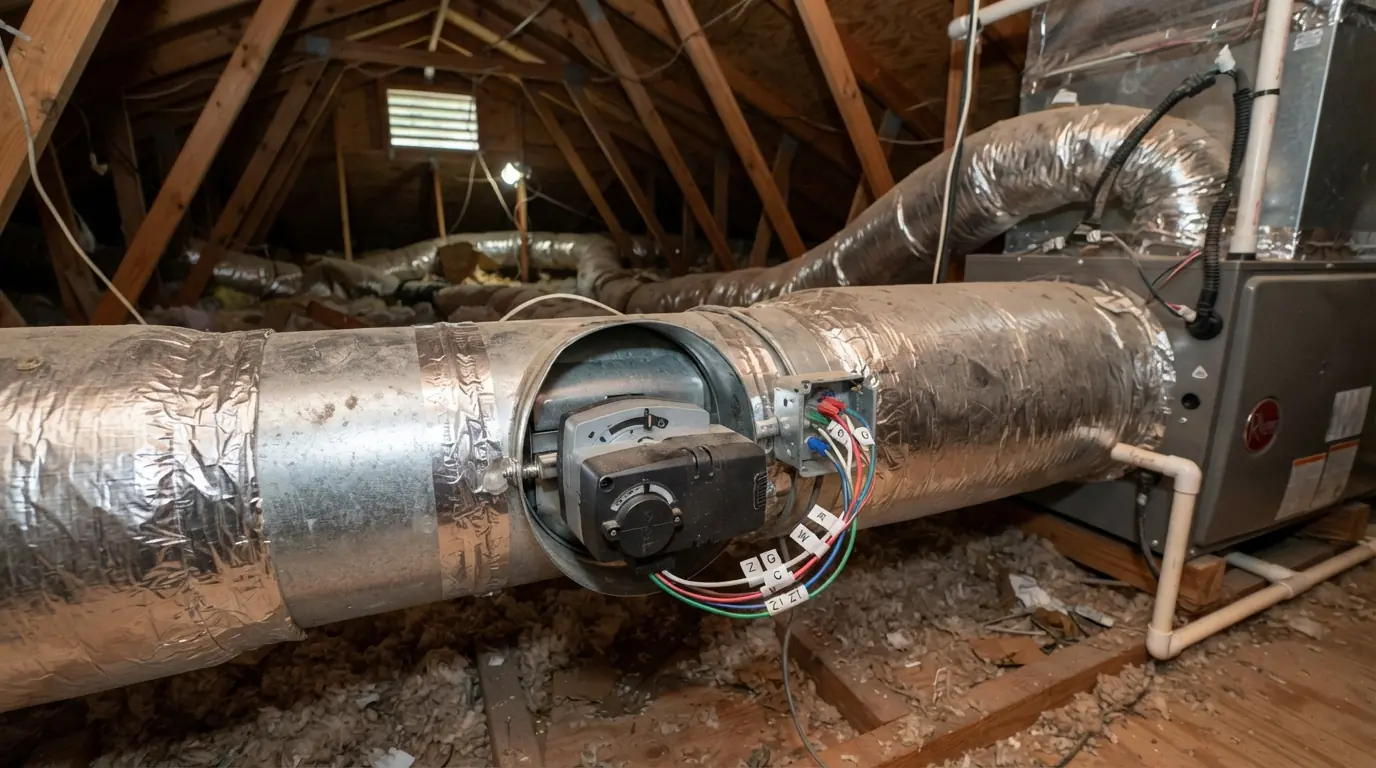
A motorized damper is a blade inside the duct that opens and closes on a signal from the zone panel. We install one in the trunk or branch serving each zone, usually near the air handler where they can be reached for service. The damper size and type depend on the duct: round, rectangular, flex or duct board. Dampers are wired to a zone control panel that decides which zones call for air and tells the system when to run, and we label every damper and wire for the next technician.
Bypass and static pressure control
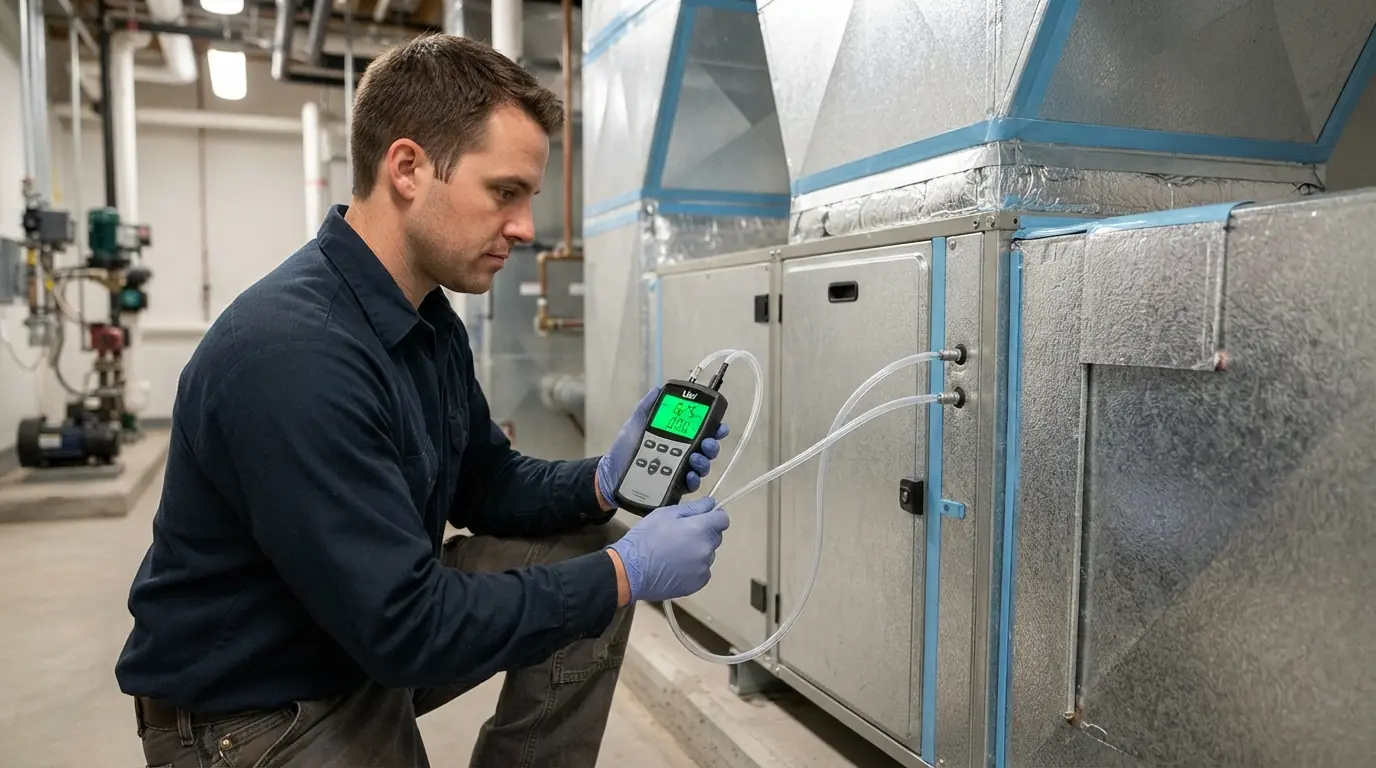
When only one small zone calls for cooling, most of the dampers close and the blower is pushing against a much smaller duct system. Static pressure rises, airflow across the coil drops, and the coil can freeze. A single-speed system usually needs a way to relieve that, by sizing the smallest zone generously or adding controlled relief. Variable-speed systems handle it far better because the blower slows down. We measure static pressure with the dampers closed before we call the job finished.
Zoned thermostats
Each zone gets its own thermostat, placed where it reads the zone accurately rather than beside a supply grille or in afternoon sun. The thermostats talk to the zone panel, which sequences the dampers and the equipment. With a heat pump or a two-stage system, the panel also decides when to use the higher stage. We set sensible limits so one zone at a very low setpoint can't run the system flat out while the rest of the house is satisfied.
Local conditions
Zoning in Richmond West family homes
Richmond West, the neighborhood around our service office, is mostly family households, and at the last full census about 42 percent had children at home, which is exactly the pattern zoning helps with: bedrooms that need cooling at night while the living areas sit empty. Miami International Airport's 100 degree reading on August 18, 2026 is also the kind of afternoon when an upstairs or a west-facing room runs far warmer than the rest of the house.
Step by step
How a zoning install runs
- 1
Survey the house
Rooms, sun exposure, use and complaints.
- 2
Check the system
Size, stages, blower type and duct.
- 3
Measure static pressure
Baseline before any change.
- 4
Design the zones
Grouped by exposure and use.
- 5
Install dampers and panel
Dampers labelled, panel wired.
- 6
Place the thermostats
Each where it reads its zone.
- 7
Test every zone
Static pressure checked with dampers closed.
Timing
How long zoning takes to install
A two-zone system with good duct access is usually installed in one day. Three or more zones, duct board trunks, or static pressure fixes can make it two. Thermostat wire runs through finished walls add time, and we schedule attic work for the morning.
FAQ
Questions Miami customers ask about AC zoning system installation
Often, if the system has capacity and the duct is sound. If not, those get fixed first.
Most homes do well with two or three, grouped by exposure and how the rooms are used.
Most can, but variable-speed systems handle it best. We check static pressure first.
For one problem room, often yes. For a whole floor, zoning usually makes more sense.
It can, by not cooling empty rooms, but only when the system is sized and set up correctly.
Zoning changes to the duct and controls may need a mechanical permit; we check and pull it when required.
Same category
Related installation work we handle in Miami
Air Handler Replacement
Closet air handlers, heat kit sizing.
AC Line Set Replacement
Line set flush or replace, refrigerant changeover to R-454B.
Condenser Replacement
Outdoor unit only, pad and tie-down replacement.
Upstairs too hot, downstairs too cold? Call the Miami desk
A technician checks your system and duct and tells you whether zoning or something else fixes it.