Ductwork & Air Quality
Air balancing for Miami homes and offices with uneven rooms
Most uneven temperatures aren't a thermostat problem, they're an airflow problem. We measure how much air every room actually gets and adjust the system so each one gets what it needs.
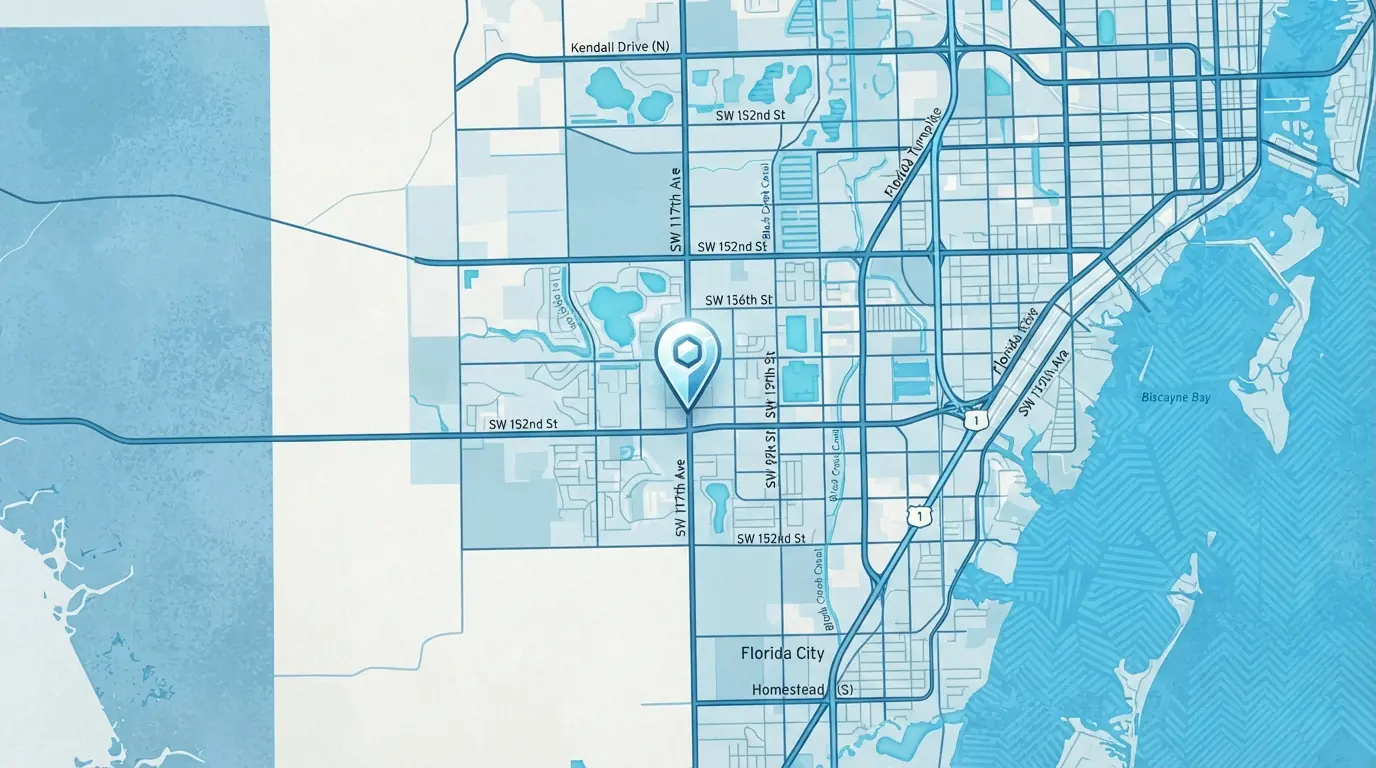
Miami service office on SW 117th Ave · We answer 24/7
- Answered 24/7
- Miami service office
- Measured at every grille
Updated October 2026
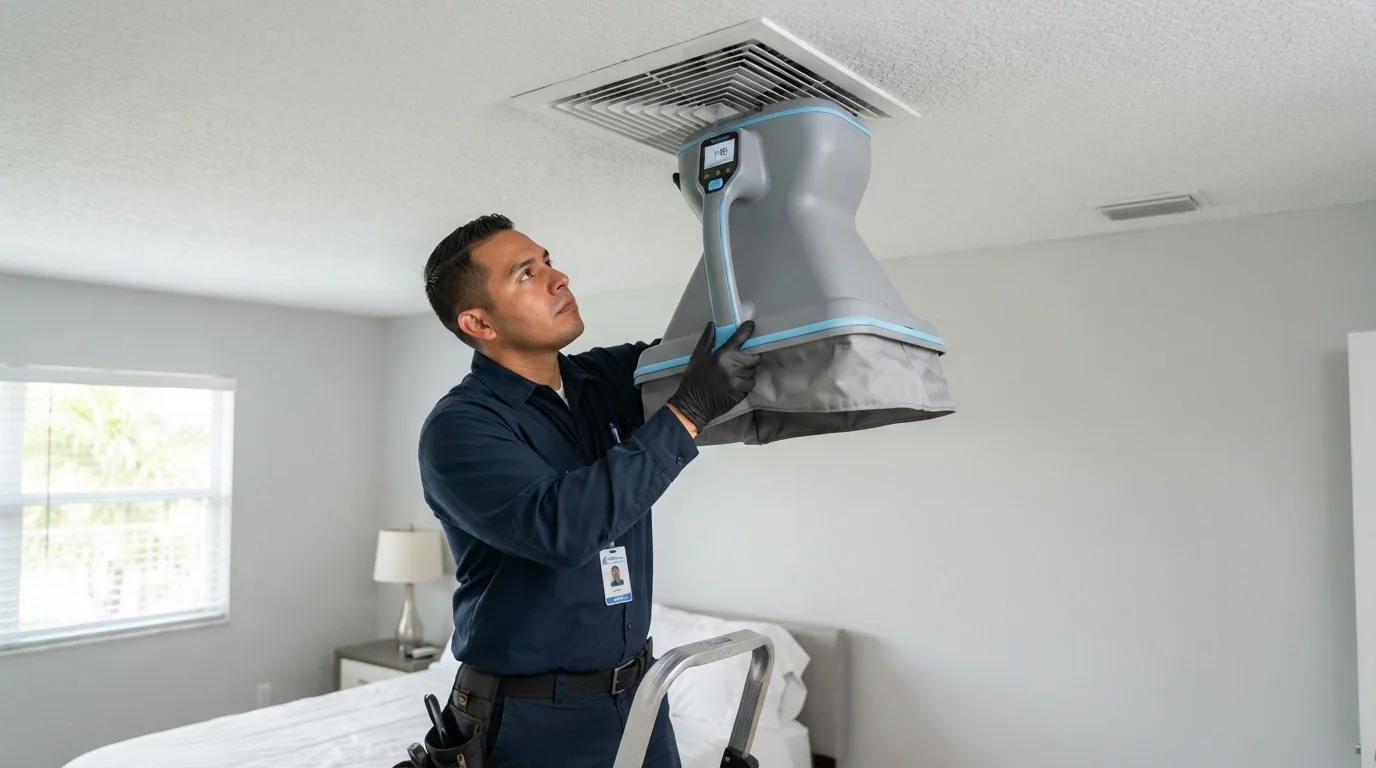
Air balancing in Miami measures the airflow at every supply and return grille with a flow hood or anemometer, compares it with what each room needs, and adjusts dampers, fan speed and duct connections until the rooms are even. A technician from our SW 117th Ave office also checks static pressure, because a system starved of airflow can freeze its coil as well as leave rooms warm.
The job
Why rooms end up uneven
Duct systems are often installed without being balanced, then changed over the years: a room added, a return blocked, a flex run crushed, a damper knocked shut. The result is a bedroom that never cools while the living room is cold.
Balancing starts with numbers. Measuring the actual airflow at each grille shows which rooms are short, which are over-supplied, and whether the whole system is moving enough air to begin with.
What moves the price
What decides the price of air balancing
Number of grilles
Each supply and return is measured.
Duct access
Attic and ceiling access for dampers.
Damper work
Adding or repairing balancing dampers.
Duct repairs
Crushed or disconnected runs fixed.
Fan settings
Blower speed adjusted to the system.
Commercial systems
More zones and larger ducts.
Report
Before and after readings recorded.
What we see on this job
Hot and cold rooms
A room that stays warm usually isn't getting its share of air: a long, crushed or disconnected duct run, a closed or missing damper, a supply grille too small for the room, or no return path when the door is shut. A room that's too cold may be over-supplied because it's closest to the air handler. We measure both kinds of rooms, find the reasons, and fix them in order: disconnected and crushed ducts first, then dampers and grilles, then fan speed.
Airflow measurement at every grille
We measure the airflow at each supply grille and the returns with a flow hood or anemometer, and total static pressure across the air handler. Those numbers show whether the system's total airflow is right for its capacity and how it's divided between rooms. We record every reading before and after, room by room, so you can see exactly what changed and what the adjustments achieved. Without measurement, balancing is guessing, and guessing usually moves the problem from one room to another.
Balancing after renovations
Renovations change the loads: a wall removed, a room added, new windows, a converted garage. The duct system that suited the old layout may not suit the new one. After a renovation we re-measure, adjust the dampers and fan speed, and tell you where the duct itself has to change, for example adding a return to a new bedroom or resizing a run that now serves a bigger space. Balancing can't create air the system doesn't have, so we say when that's the real issue.
What is included
What an air balancing visit includes
- Problem rooms discussed and noted
- Total static pressure measured
- Airflow measured at every supply grille
- Return airflow measured
- Duct runs inspected for damage
- Dampers adjusted or added
- Blower speed checked and set
- Readings recorded before and after
- Written summary of remaining issues
Local conditions
Airflow and frozen coils in Miami systems
In Miami, restricted airflow is one of the most common reasons an AC coil freezes up, and a clogged filter is the single most common cause of that. Balancing looks at the same airflow problem from the rooms' side: the measurements that show why one bedroom stays warm also show whether the whole system is moving enough air to keep the coil from icing on a humid night.
Step by step
How an air balancing visit runs
- 1
Talk through the problem rooms
Which rooms, when and how bad.
- 2
Measure static pressure
Total airflow health.
- 3
Measure every grille
Supply and return airflow.
- 4
Inspect the duct
Crushed, disconnected or closed runs.
- 5
Adjust
Dampers, grilles and fan speed.
- 6
Measure again
Readings after adjustment.
- 7
Report
What changed and what still needs work.
Timing
How long air balancing takes
Most homes take about half a day to measure and adjust. Crushed or disconnected ducts, added dampers or a return for a closed-off bedroom can add another visit. Commercial spaces take longer depending on the number of systems and grilles.
FAQ
Questions Miami customers ask about air balancing
Often, when the room is short on air. If the duct is undersized, it needs duct work too.
With a flow hood or anemometer at each grille, plus static pressure at the air handler.
No. Balancing sets the airflow split; zoning adds dampers and thermostats that change it.
Usually yes, because the loads and layout changed.
Yes, including offices and retail spaces with several systems.
Most homes take half a day, longer with duct repairs.
Same category
Related ductwork work we handle in Miami
UV Light Installation
Coil-mounted UV lamps, bulb replacement.
Air Filtration Systems
Media filter cabinets, filter upgrades for allergies.
Indoor Air Quality Testing
Humidity and temperature logging, moisture checks at the system.
Rooms never the same temperature? Call the Miami desk
A technician measures every grille and balances the system so each room gets its share.