Commercial & Refrigeration
Server room cooling for Miami offices and IT closets
Servers and network gear produce heat all day and all night, while the building's comfort system is set back after hours. A dedicated system sized for the room's heat keeps the equipment inside its safe range around the clock.
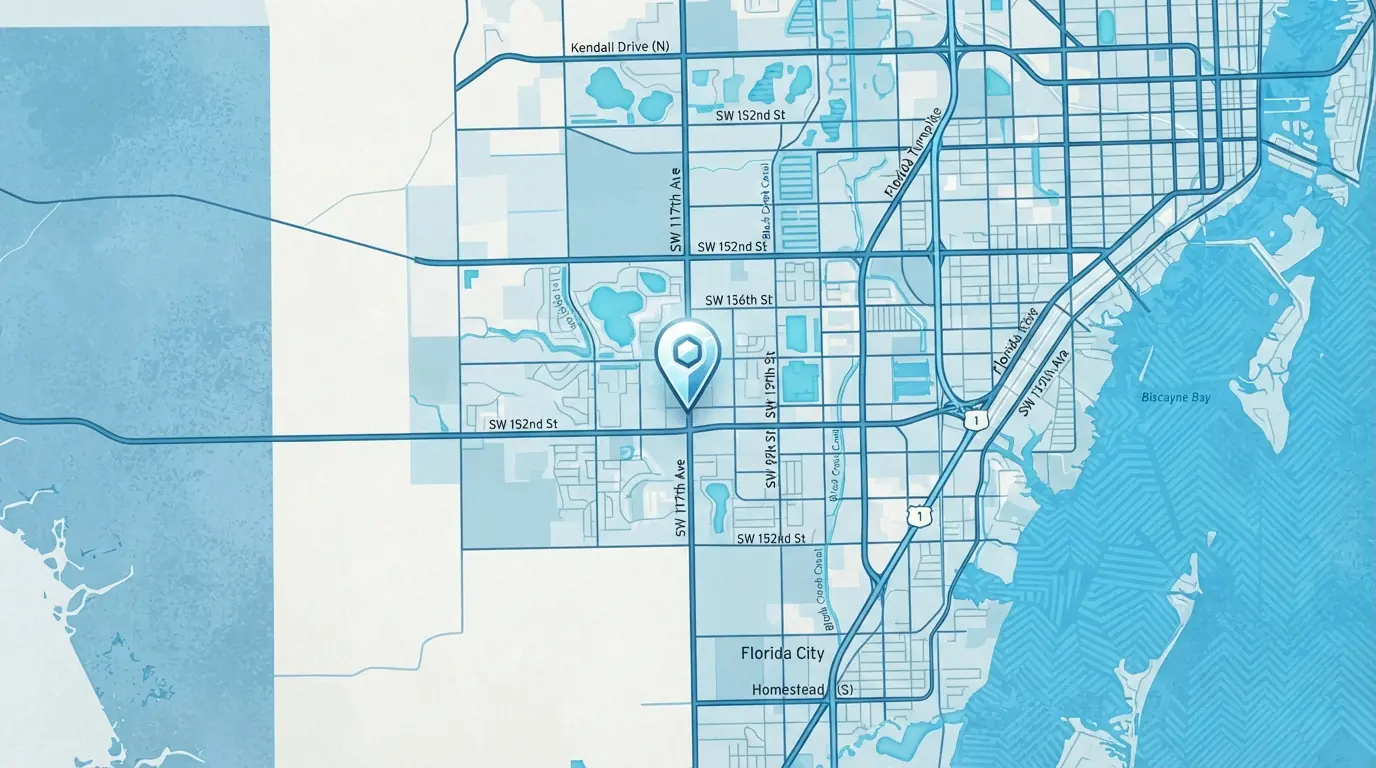
Miami service office on SW 117th Ave · We answer 24/7
- Answered 24/7
- Two Miami-Dade offices
- Dedicated and redundant
Updated October 2026
Server room cooling in Miami usually means a dedicated ductless system sized to the room's equipment load, running independently of the building's comfort cooling, often with a second unit for redundancy and a temperature monitor that alerts someone before equipment overheats. Our Medley and SW 117th Ave offices size, install and service these systems for offices and small IT rooms.
The job
Why building AC isn't enough for a server room
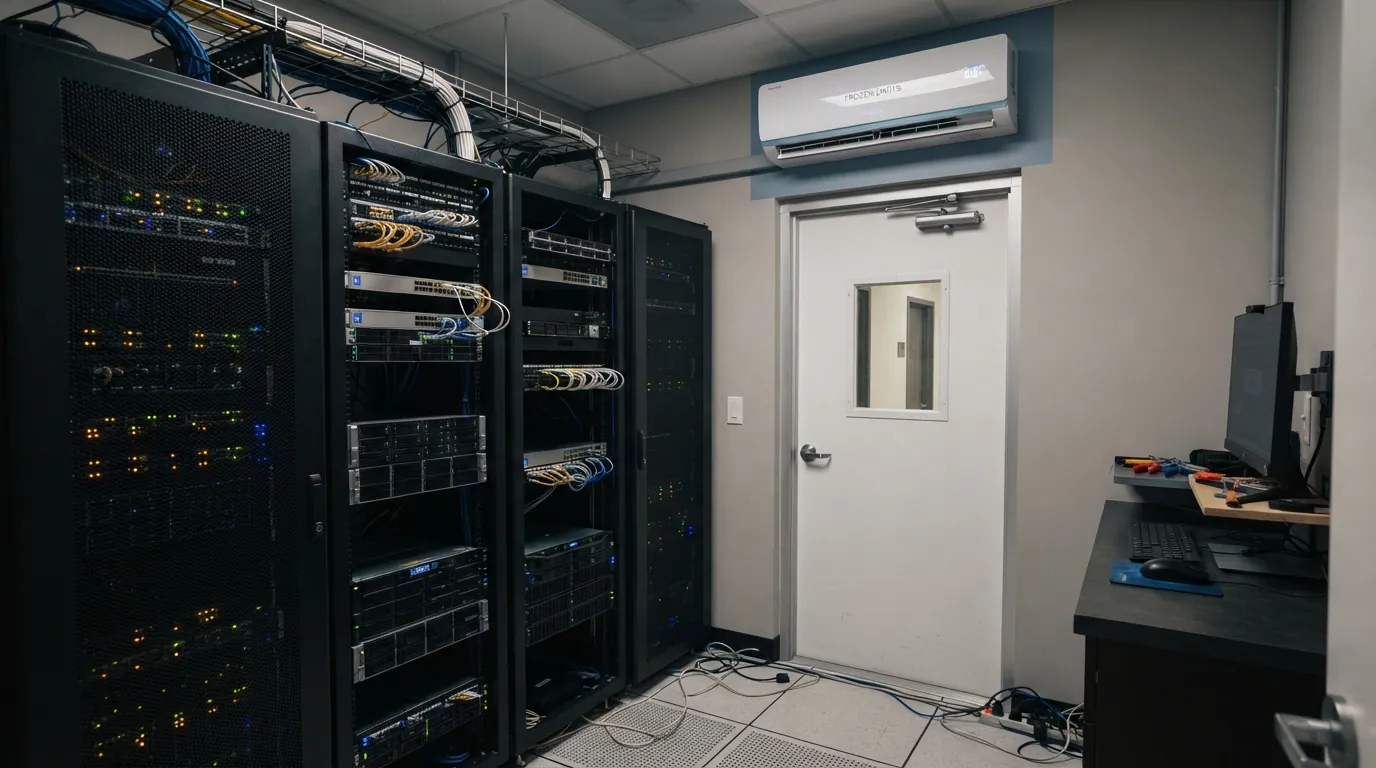
A comfort system cools people during business hours and eases off at night and on weekends. Servers don't. A closet full of network gear and servers produces a steady heat load around the clock, and a room that's fine at 2 p.m. can overheat at 2 a.m. when the building system sets back.
The fix is cooling sized to the equipment, running all the time, independent of the rest of the building, with a way to know when it isn't keeping up.
Your options
Building AC, one dedicated unit or a redundant pair
| Building AC only | One dedicated unit | Redundant pair | |
|---|---|---|---|
| Runs after hours | Often not | Yes | Yes |
| Single point of failure | Yes | Yes | No |
| Best for | A switch or two | Small server closets | Rooms where downtime is costly |
Monitoring belongs with any of the three; it's what tells you when cooling isn't keeping up.
What moves the price
What decides the price of server room cooling
Equipment heat load
Sized from power draw, not floor area.
One unit or two
Redundancy doubles the equipment.
Unit type
Year-round rated mini splits cost more.
Monitoring
Sensors, alerts and integration.
Line set route
Distance from room to outdoor unit.
Electrical
Dedicated circuits, generator or UPS tie-in.
Building approvals
Landlord or association rules for outdoor units.
What we see on this job
Dedicated mini split for IT rooms
For most small server rooms and IT closets, a dedicated ductless mini split is the practical answer: an indoor head sized to the equipment's heat output, an outdoor unit, and controls set to run continuously. Units rated for low ambient operation or designed for year-round cooling are preferred, since the load doesn't drop in winter. We size from the equipment's power draw rather than the room's floor area, and place the indoor head so it doesn't blow onto or drip on the racks.
Redundant cooling
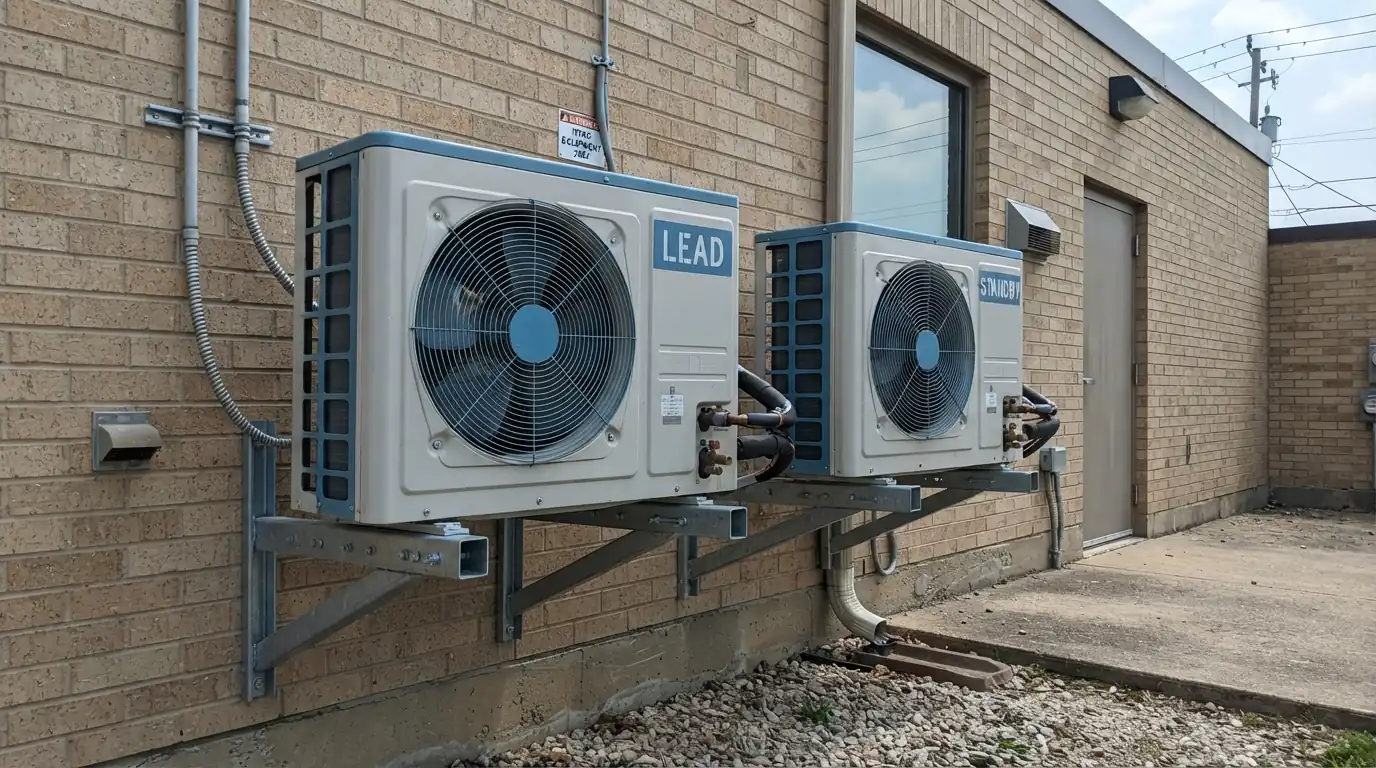
When the equipment matters, one cooling unit is a single point of failure. A second unit, sized so either can carry the load alone, gives redundancy: if one fails or is down for service, the other keeps the room safe. Controllers can alternate the units to even out wear and bring the standby unit on automatically if the lead unit fails or the temperature climbs. We design the pair together, put them on separate circuits where possible, and test the switchover before handing it over.
Temperature monitoring
A cooling system that fails at night is only a problem if nobody finds out until morning. A network-connected temperature sensor, or the monitoring built into many mini split controllers, can send an alert when the room climbs past a set point. We recommend where to place sensors, typically at the equipment intakes, and set sensible thresholds with the IT team. Monitoring is inexpensive compared with the equipment it protects, and it turns a silent failure into a phone call.
What is included
What a server room installation includes
- Equipment heat load measured
- Cooling sized with margin
- Year-round rated equipment
- Indoor head placed away from racks
- Condensate routed away from equipment
- Lead and standby controls where redundant
- Temperature sensors at equipment intakes
- Alert thresholds set with IT
- Switchover tested before handover
Local conditions
Power outages and server rooms in Miami-Dade
After Hurricane Irma, about 92 percent of FPL customers in Miami-Dade lost power, and some waited more than a week for it to return. Server rooms on backup power still need cooling, so the cooling units' circuits belong on the generator or UPS plan, and after an outage the cooling should be confirmed running before the equipment is brought back up.
Step by step
How a server room project runs
- 1
Survey the room
Equipment, power draw and layout.
- 2
Size the cooling
From the heat load, with margin.
- 3
Design redundancy
One unit or a lead and standby pair.
- 4
Plan monitoring
Sensor placement and alert thresholds.
- 5
Install
Heads, outdoor units and controls.
- 6
Test switchover
Standby unit takes over on failure.
- 7
Hand over
Settings, alerts and service schedule.
Brands we service and install
FAQ
Questions Miami customers ask about server room cooling
Not reliably. It sets back after hours while the servers keep producing heat.
From the equipment's power draw, which becomes heat, plus a margin.
If downtime is costly, yes. Either unit should carry the load alone.
Follow the equipment makers' ranges; we set alerts with your IT team.
Yes, with sensors at the equipment intakes and alerts to your phone.
Yes, and they can be added to a commercial maintenance agreement.
Same category
Related commercial work we handle in Miami
Ultra-Low Temperature Freezer Service
Cascade system diagnostics, temperature alarm response.
PTAC Repair and Replacement
Hotel PTAC units, PTAC to mini split conversion.
VRF System Service
Fault code diagnostics, twice-yearly maintenance.
Server room running hot? Call the Miami office
A technician surveys the room and designs cooling sized to the equipment.