Guide
Why a condo air conditioner leaks into the unit below, and how to stop it
Drain lines, pans, pumps and shared stacks: where condo AC water goes, why it ends up in a neighbor's ceiling, and who usually pays.
Miami service office on SW 117th Ave · We answer 24/7
- Answered 24/7
- Written for Miami
- Planning ranges, not quotes
Updated October 2026
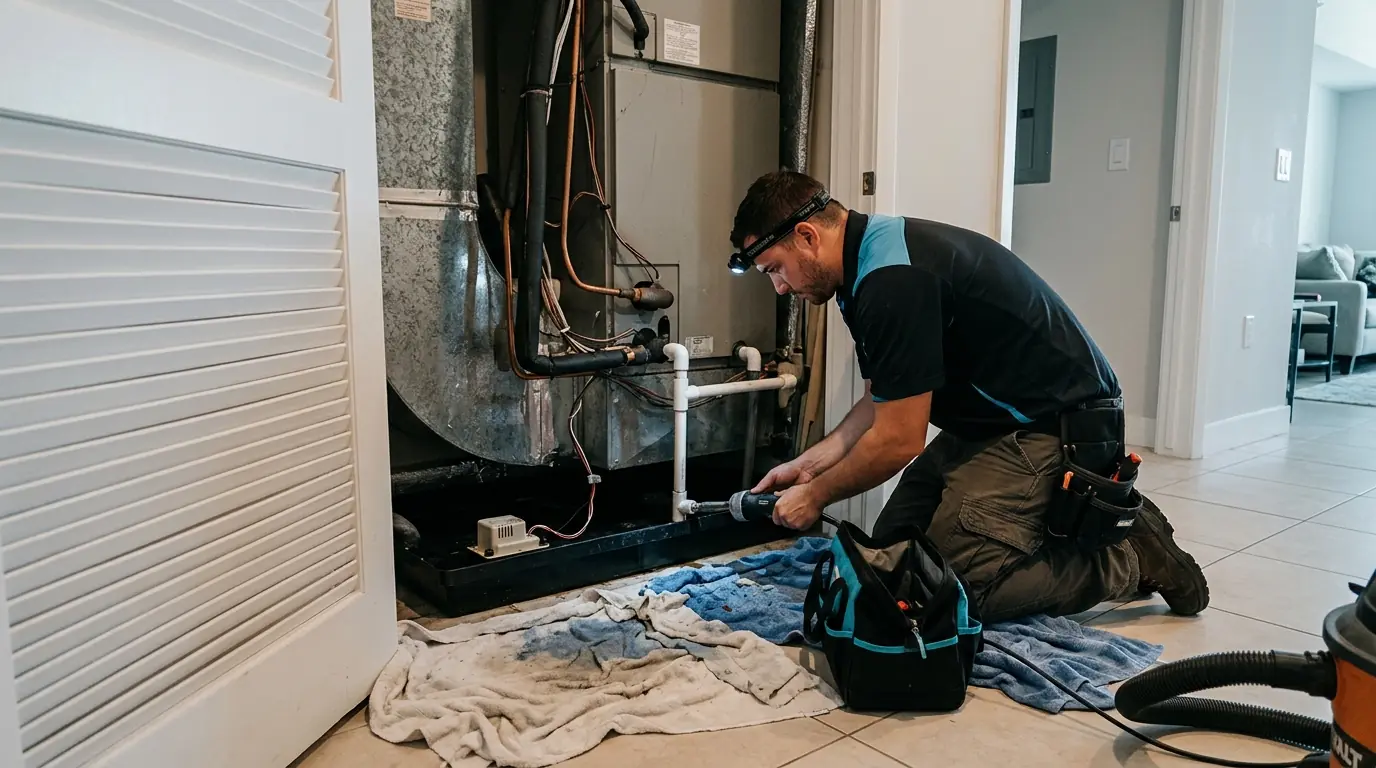
A condo AC leaks into the unit below when its condensate cannot get out: a clogged drain line, a cracked or rusted pan, a failed condensate pump, or a backed-up shared drain stack. A float switch that shuts the system off on high water prevents most of these leaks, and clearing the drain twice a year is the least expensive protection a condo owner has.
By Nelson Galloway, Cooling and Refrigeration Guides Editor · Updated October 2026
Where the water is supposed to go
An air conditioner in Miami pulls gallons of water out of the air on a humid day. That water drips off the indoor coil into a drain pan, then runs through a condensate line to a drain. In a condo the line usually ties into a shared condensate stack in the wall or chase, or into a plumbing drain, and in some units a small pump lifts the water to get it there. Every part of that path can fail.
Why it ends up downstairs
The most common cause is a drain line clogged with algae and sludge, which grows quickly in warm, wet lines. The pan fills and overflows, and because the air handler closet sits on a floor over a neighbor's ceiling, the water goes down. Other causes include a primary pan rusted through on an older unit, a condensate pump that stopped, a disconnected or cracked line, and a shared stack that backs up and pushes water into several units at once.
Frozen coils cause leaks too. When an iced coil thaws, it releases more water in a short time than the pan and drain can handle.
The switch that prevents most of it
A float switch mounted in the drain pan, a secondary pan or the drain line cuts power to the system when water rises. A shut-off AC is an inconvenience, while water through a ceiling is an insurance claim. Florida's mechanical code calls for a secondary way to handle condensate where an overflow would damage the building, typically a secondary pan or an overflow shutoff switch, but older installs and past repairs sometimes leave switches missing or disconnected. Testing one takes minutes.
Who usually pays
In many Florida condos the air conditioning equipment serving a single unit belongs to that unit's owner and the shared stack belongs to the association, but your declaration and your insurance policies decide, not a general rule. When a leak happens, take photos, shut the system off, call the association and your insurer, and have a technician write down where the water came from. That note matters when two owners and an association are sorting out the bill.
A maintenance routine that works
Clear and flush the condensate line at least twice a year, more often if it has clogged before, and test the float switch at the same visit. Change the filter on schedule so the coil does not freeze. On older units, look at the pan for rust. If the unit uses a condensate pump, clean its reservoir and confirm its safety switch is wired to shut the system off.
If you need a technician
Related services
AC Drain Line Cleaning
Clogged condensate drain, float switch shutting the AC off.
Condensate Pump Replacement
Condensate pump not draining, pump safety switches.
Condo and High-Rise AC Replacement
Fan coil units, building and association approvals.
AC Tune-Up
Pre-summer tune-up, refrigerant and electrical checks.
FAQ
Questions about this guide
Water in the pan, a musty smell, gurgling, or the system shutting itself off on its float switch are the early signs.
You can flush the line at its access port with water or a mild vinegar solution. A line that keeps clogging, or a stack backup, needs a technician.
Yes. It is the simplest protection against flooding the unit below, and it should be tested regularly.
Ask the owner above to shut off their AC if you can, call the association, and call a technician to find the source.
Want a technician to look at it?
Call the Miami office any hour and a person answers.