Guide
How long an air conditioner really lasts in Miami
Why Miami systems wear out sooner than the national average, what shortens and stretches their life, and the signs it is time to plan a replacement.
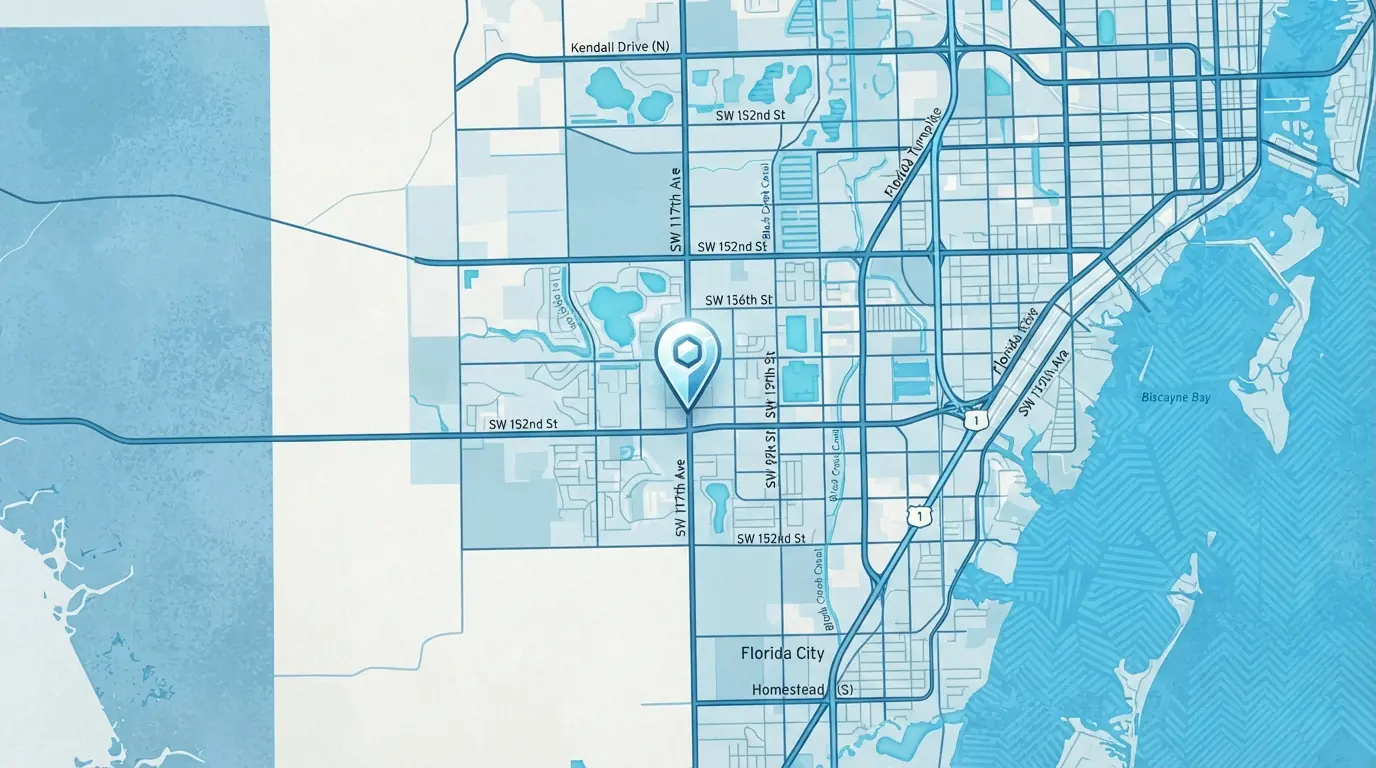
Miami service office on SW 117th Ave · We answer 24/7
- Answered 24/7
- Written for Miami
- Planning ranges, not quotes
Updated October 2026
Most central air conditioners in Miami last about 10 to 15 years, shorter than in cooler parts of the country, because they run eight to ten months a year and, near the coast, sit in salt air. Annual maintenance, a clean filter, sealed duct and a coastal coil coating stretch that life, while neglect, oversizing and salt shorten it.
By Nelson Galloway, Cooling and Refrigeration Guides Editor · Updated October 2026
Why Miami wears systems out faster
Run time is the big difference. A system in Miami runs most of the year and often twelve to sixteen hours a day in summer, so a ten-year-old unit here has worked as many hours as a much older one in a mild climate. Humidity adds load too: the coil stays wet for months, drains stay busy and the blower runs long cycles.
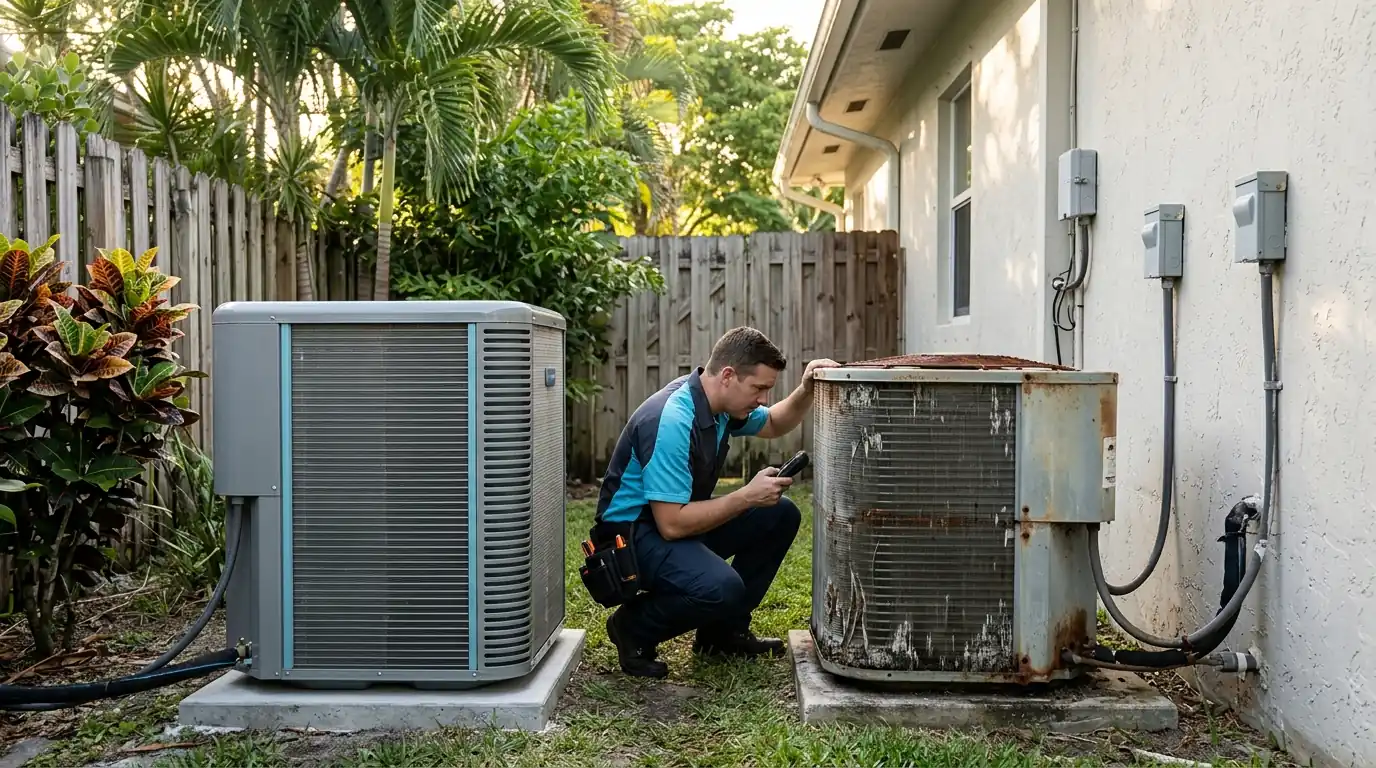
Location adds a second clock. Within a few miles of the ocean or the bay, salt air attacks the aluminum fins and copper tubing of the outdoor coil, and pinhole leaks can appear years earlier than they would inland.
What stretches the life of a system
Maintenance does most of the work: a filter changed every month or two in summer, an annual tune-up with coil cleaning and drain service, and a condenser kept clear of plants and debris. Sealed duct matters because a leaky duct system makes the equipment run longer for the same comfort. Near the coast, regular freshwater rinsing and a protective coil coating slow corrosion, and a coastal-rated condenser at replacement time starts the clock in a better place.
What shortens it
Oversizing is a quiet killer. An oversized system short-cycles, never runs long enough to dry the air, and wears its compressor and contactor with constant starts. Undersized systems fail the other way, running flat out for months. Low refrigerant from an unrepaired leak, dirty coils, clogged drains that trip float switches, and power surges after storms all take years off a unit.
Signs it is time to plan a replacement
Age alone is not a reason, but age plus symptoms is. Plan ahead when a system is past ten years and you see repeated refrigerant leaks, a failed compressor or outdoor coil, rising power bills for the same comfort, or rooms that no longer cool on August afternoons.
A common rule of thumb multiplies the repair price by the system's age in years, and when the result passes roughly $5,000, replacement deserves a serious look. It is a starting point for the conversation, not a verdict, and a newer system with one failed part is almost always worth repairing.
Planning beats replacing in a heat wave
Replacements booked in spring or fall get the equipment you want, a permit pulled without a rush and an install day that fits your schedule. Replacements forced by a dead system in August get whatever is in stock and the next open slot during the busiest weeks of the year. If your system is past ten years, an inspection before summer tells you whether to budget for this year or next.
Summary
At a glance
| Factor | Effect on system life |
|---|---|
| Annual maintenance | Adds years |
| Coastal salt air | Shortens outdoor coil life |
| Oversized equipment | Shortens compressor life |
| Sealed duct | Cuts run time |
| Coil coating near the coast | Slows corrosion |
If you need a technician
Related services
AC Replacement
Full system replacement, SEER2 upgrade.
AC Tune-Up
Pre-summer tune-up, refrigerant and electrical checks.
Coastal Condenser Coil Coating
Coating a new condenser, salt rinse and inspection schedule.
HVAC Inspection
Pre-purchase HVAC inspection, landlord and turnover inspections.
FAQ
Questions about this guide
About 10 to 15 years for a central system, with coastal and poorly maintained units at the low end of that range.
Roughly the same, since a Miami heat pump spends most of its life cooling. Maintenance and location matter more than the type.
For a small repair, often yes. For a compressor or coil on a system that old, compare the repair against replacement before deciding.
A tune-up, coil cleaning, leak repair and a clean filter can buy time, but plan the replacement so it is not forced on you in August.
Want a technician to look at it?
Call the Miami office any hour and a person answers.